The reason is that, compared to most other professions, security guards have to deal with the danger to a greater extent. So insurance is not a negotiable aspect of your security guard business.
Types of Insurance Policies For Security Guard Businesses
The nature and size of your security guard business play a crucial role in determining the type of insurance you need. These insurance policies are generally customized to cater to the unique requirements of business organizations.
Suppose your business is a sole proprietorship; it will automatically need a different insurance policy than a company. Customizing your insurance policies means you do not pay a premium for what you do not need to insure.
Before you learn and get into counting dollars, it’s better to get a general idea of the types of security company insurance is there. You can have-
- General Liability Insurance
- Commercial Automobile Insurance Policies
- Workers’ Compensation Insurance
- Commercial Umbrella Insurance Policies
- Professional Liability Insurance Policy
- Business Owner’s Policy (BOP)
1) General Liability Insurance Policy
What is General Liability Insurance?
As the name suggests, General Liability Insurance (GLI) provides coverage to businesses against general claims. These claims include bodily injuries and property damage done on the part of the company. One can refer to a general liability insurance policy as one of the most basic policy coverage businesses need.
General liability insurance is a must-have for most professional service businesses. It covers claims related to bodily injury, property damage, and advertising injury. According to Insureon’s 2024 security guard insurance cost report, security guard companies pay a median of $42 per month (about $504 per year) for general liability insurance, with most firms paying between $500 and $1,500 annually depending on payroll size, services offered, and claims history. Unarmed patrol firms sit at the low end; firms running armed details, alarm response, or executive protection routinely pay 2-3x more (see the armed-guard surcharge section below).
In most cases, security guard businesses have to furnish proof of general liability to get the business license in the first place.
Why do you need General Liability Insurance?
Many even refer to general insurance as a variant of commercial insurance for protecting the security guard business from financial losses. However, the claims must arise from any property damage or bodily injuries. So, in the case where your security guard or patrolling officer gets in an accident while on duty and causes bodily injuries or property damage to a third party, this insurance will help you cover the losses.
2) Commercial Automobile Insurance Policies
What is Commercial Automobile Insurance?
Commercial Automobile Insurance is an insurance coverage most businesses avail of where there is a usage of automobiles or vehicles. For security companies, these vehicles mostly include patrolling cars. Security guards cannot do their jobs sitting idle in a place. They need to move across locations, and even if you are a small security guard business, you will need at least one vehicle. In such cases, get insurance for your patrolling vehicles to avoid losses when things go wrong.
If your business uses vehicles, commercial auto insurance is necessary to cover accidents, injuries, and damages involving company vehicles. Per Insureon’s 2024 small business insurance benchmarks, security firms with patrol vehicles pay a median of $147 per month (about $1,762 per year) per vehicle, with the bulk of firms landing between $1,500 and $3,500 per vehicle per year. Costs scale with vehicle count, miles driven, MVR (motor vehicle record) history of your drivers, and whether the vehicle is marked as a patrol unit (insurers treat marked patrol vehicles as higher exposure than unmarked supervisor SUVs).
Why do you need Commercial Automobile Insurance?
Commercial Automobile Insurance will cover the damages for you and other vehicles involved in a mishap. Additionally, these insurance policies offer cover for employees driving the car during the accident. Any property damage caused due to the vehicle accident also comes under this insurance policy.
3) Worker’s Compensation Insurance Policies
What is Worker’s Compensation Insurance?
Worker’s Compensation Insurance helps businesses provide coverage against any claims or lawsuits filed by their employees for losses or damages caused by the employer. In most regions, the worker’s compensation insurance is manadatory for security businesses. The law mandates organizations to take this insurance to ensure the welfare of their employees.
Why do you need Worker’s Compensation Insurance?
The employees or their family members may claim coverage in the case of loss of job, injuries during work, loss of wage due to injuries, death due to an accident at the workplace, or any other loss incurred due to the negligence of the employer. These insurance policies ensure compensation for employees.
If your business has employees, workers’ compensation insurance is usually required by law. This insurance covers medical expenses and lost wages for employees who get injured or fall ill due to their jobs. The cost of workers’ compensation insurance varies widely depending on your industry and the number of employees you have. According to Insureon’s 2024 workers’ comp cost data, security guard companies pay a median of $135 per month (around $1,620 per year) for workers’ comp. State-published 2024 rate guides put security guard class codes (NCCI 7720 in most states) at roughly $2.50 to $4.50 per $100 of payroll for unarmed guards, with armed-guard class codes (NCCI 7723) running $5.00 to $9.00 per $100 of payroll. Rates are higher in California, New York, and Florida than the national median.
4) Commercial Umbrella Insurance Policies
What is Commercial Umbrella Insurance?
Most security guard businesses are known for offering services that pose a danger to their employees. Such services are crucial for these businesses as it helps them make a mark for themselves in the market. Nonetheless, in such cases, it is highly recommended you take a commercial umbrella insurance policy. The policy provides insurance coverage for a variety of claims and helps businesses pay suitable compensation.
Why do you need Commercial Umbrella Insurance?
These policies cover much more than any other business insurance policy would. For instance, suppose your security guard business faces a lawsuit seeking considerable compensation. In such cases, an umbrella insurance policy will help you cover excess losses to minimize the impact on your business.
5) Professional Liability Insurance Policy
What is Professional Liability Insurance?
Professional Liability Insurance Policy covers damages caused by a lack of professionalism from your end. For instance, suppose a client is aggrieved and suffered losses due to some mistake from your end. In such cases, a professional liability insurance policy will help you cover your losses.
Why do You Need Professional Liability Insurance?
These are very useful for security guard businesses. But unfortunately, there can often be cases of false apprehension causing further complications. So a professional liability insurance policy can help you get out of the messy soup with minimal consequences.
Also known as errors and omissions (E&O) insurance, professional liability insurance protects your business if a client claims that your services caused them financial harm due to negligence, mistakes, or incomplete work. Insureon’s 2024 small business benchmarks put professional liability for security firms at a median of $65 per month (about $780 per year), with most firms paying $700 to $2,000 per year. Premium rises with revenue, the dollar value of properties guarded, and any prior claims involving missed patrols, use-of-force complaints, or alarm response errors.
6) Business Owner’s Policy (BOP)
A Business Owner’s Policy (BOP) combines general liability, property insurance, and often business interruption insurance into one package, making it a cost-effective option for many professional service businesses. Per Insureon’s 2024 BOP data, security firms pay a median of $67 per month (around $800 per year) for a BOP, with most firms in the $700 to $2,800 per year range. A BOP typically saves 10-15% versus buying GLI and commercial property separately, so it’s worth quoting before committing to standalone coverage.
Security Company Insurance at a Glance: Coverage Comparison
| Coverage | What it covers | When required | Typical 2024 cost (Insureon medians) |
|---|---|---|---|
| General Liability (GLI) | Third-party bodily injury, property damage, advertising injury | Required by most state and municipal security licenses; usually required by client contracts | ~$42/mo (~$504/yr); armed firms 2-3x |
| Professional Liability (E&O) | Negligence, missed patrols, alarm response failures, errors in incident reports | Often required by larger commercial and government contracts | ~$65/mo (~$780/yr) |
| Workers’ Compensation | Medical bills and lost wages for guards injured on the job | Mandatory in every US state except Texas once you have employees | ~$135/mo (~$1,620/yr); armed-class codes 2x |
| Commercial Auto | Accidents, injuries, and damages involving company patrol vehicles | Required wherever a company-owned vehicle is used for business | ~$147/mo (~$1,762/yr) per vehicle |
| Surety Bond / Fidelity Bond | Theft or dishonest acts by guards on client property | Mandatory in many states for guard licenses (e.g., California, Florida, Texas) | One-time $100-$500 per $10,000 of coverage |
This table is a quick reference, not a substitute for an agent quote. Get bound quotes from at least two carriers before renewing each year; rates have moved up in most states since 2022 and a 5-minute Insureon or NEXT Insurance quote will catch any surprises.
Armed-guard insurance surcharges: what to expect
If your firm runs armed details, the premium math changes meaningfully. Insureon and NEXT Insurance both publish armed-guard rate guidance that lands in the same range: expect to pay 2x to 3x the unarmed rate for general liability and professional liability, and roughly 2x the workers’ comp rate because armed guards fall under a separate class code (NCCI 7723 vs. NCCI 7720 for unarmed). A firm paying $504/yr in unarmed GLI should budget $1,000 to $1,500/yr for the same coverage on an armed roster.
Three things drive the surcharge: (1) higher use-of-force claim severity, (2) firearm-handling liability, and (3) the additional state-license endorsements most insurers require armed firms to carry. Some carriers will refuse to write GLI for an armed firm without a minimum number of training hours per guard per year, and a small number of carriers (notably the standalone security-specialist MGAs) will quote when your standard broker can’t. If you’re shifting from unarmed to armed work, get the new quote bound before you accept the first armed contract, not after.
How to File a Security Company Insurance Claim
When a claim happens (assault allegation, property damage, vehicle accident, missed patrol that led to a loss), the speed and quality of your evidence handling determines whether you take a small premium hit or get non-renewed. Here is the sequence experienced operators run:
- Secure the scene and people first. Get medical attention for anyone injured. Call police if a crime is involved. Nothing else matters until this is done.
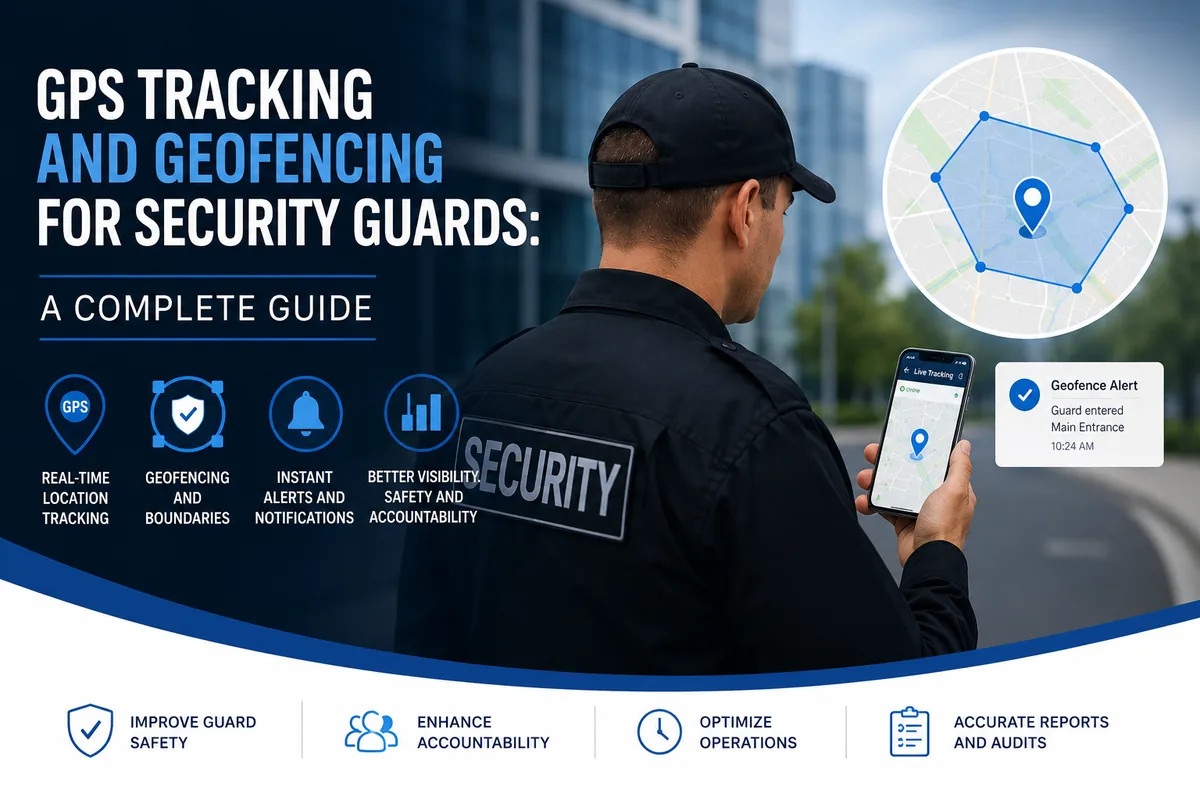
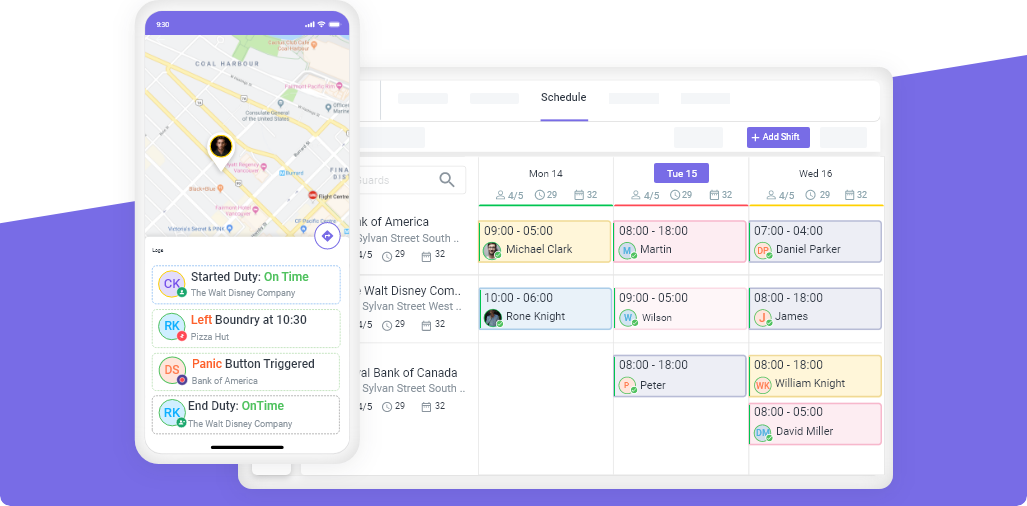
- Preserve digital evidence from the guard’s app immediately. Pull and export everything the guard’s mobile patrol tool captured during the incident window: GPS breadcrumb trail with timestamps, checkpoint scan log, photos, and the in-app incident report. Carriers and defense counsel rely heavily on this data in use-of-force and property-damage cases; firms using GPS tracking and geofencing plus an electronic incident report settle these claims faster because the timeline is not contested.
- Notify your carrier within 24-48 hours. Every commercial policy has a notice-of-loss clause; late notice is one of the most common reasons carriers deny coverage. Call your broker and the carrier’s claims line, then follow up in writing with the policy number, date and time of incident, location, names of people involved, and a short factual description (no speculation, no opinions about fault).
- Collect witness statements and supporting documents. Get written statements from the guard on duty, any supervisor on site, and any third-party witnesses while details are fresh. Pull the post orders, schedule, training records, and licensing documentation for the guard involved; the carrier will ask for all of these. If a vehicle was involved, get the police report and any dash-cam footage.
- Cooperate with the carrier’s investigator and avoid public statements. A claims adjuster or independent investigator will reach out. Be cooperative and factual. Do not post about the incident on social media, do not give media statements without your broker’s review, and do not contact the claimant directly. Everything you say can be used to value the claim against you.
Two practical notes from firms that have run claims successfully: keep a single shared folder per incident from day one (police report, photos, GPS export, incident report PDF, witness statements, all carrier correspondence), and request a copy of the final claim file from your carrier after closure. Reviewing closed claims is the cheapest training your supervisors will ever get.
Why Do Security Companies Need Insurance?
Security companies play a critical role in keeping people, property, and businesses safe. However, with this responsibility comes a significant amount of risk. From potential legal issues to unexpected accidents, security companies face various challenges that could lead to financial losses. This is where insurance comes into play. Having the right insurance coverage is essential for security companies to protect themselves, their employees, and their clients. Here’s why security companies need insurance and a look at the types of insurance they should consider. Security company insurance is more of an investment that will make you run your company easily.
1. Protection Against Liability
Security companies are often on the front lines, dealing with high-stress situations that can sometimes lead to accidents or injuries. If a security guard accidentally injures someone or causes damage to property while on duty, the company could be held liable. Liability insurance is crucial because it helps cover legal fees, medical expenses, and any settlements that may arise from such incidents. Without liability insurance, a single lawsuit could financially cripple a security company.
2. Coverage for Employee Injuries
Security guards work in environments where they may face physical risks, such as confrontations with intruders or hazardous conditions. If an employee gets injured while on the job, workers’ compensation insurance is essential. This type of insurance covers medical expenses and lost wages for employees who are injured while performing their duties. It also protects the company from potential lawsuits related to workplace injuries.
3. Protecting Company Vehicles
Many security companies use vehicles for patrolling and other duties. If a company-owned vehicle is involved in an accident, commercial auto insurance is necessary. This insurance covers the cost of repairs, medical bills, and any legal expenses that may arise from the accident. It also ensures that the company’s operations can continue smoothly without bearing the full financial burden of an accident.
4. Safeguarding Against Property Damage
Security companies often work on clients’ properties, which means there’s always a risk of accidental damage. Property damage insurance helps cover the cost of repairs if a security guard accidentally damages a client’s property while on duty. This type of insurance not only protects the security company but also reassures clients that they won’t be left out of pocket if something goes wrong.
5. Ensuring Business Continuity
In the event of a significant loss, such as a natural disaster, fire, or theft, business interruption insurance can be a lifesaver. This insurance helps cover lost income and operating expenses if a security company is forced to shut down temporarily due to an unexpected event. By ensuring that the company can recover and continue its operations, business interruption insurance helps maintain the company’s stability and reputation.
Factors That Influence Insurance Costs
Several factors can influence how much you’ll pay for insurance as a professional service business:
- Industry Risk: Businesses in higher-risk industries, like security services, generally pay more for insurance because they face greater potential for claims. Security business insurance usually comes in many forms and you will have to do proper research before making a decision.
- Business Size: Larger businesses with more employees, clients, or assets will typically pay more for insurance.
- Location: Where your business operates can also affect insurance costs. Areas with higher crime rates or stricter regulations may see higher premiums.
- Claims History: If your business has a history of frequent claims, insurers may charge higher premiums to offset the risk.
- Coverage Limits: The higher the coverage limits you choose, the more you’ll pay. However, higher limits also offer greater protection.
How do I get security guard insurance?
Getting the right insurance for your security guard company is essential to protect your business from risks like lawsuits, accidents, and property damage. Here’s a quick guide on how to get started:
1. Assess Your Needs
Identify the specific risks your business faces, such as liability, employee injuries, or vehicle use.
2. Research Providers
Look for insurance companies that specialize in security guard businesses. Check their experience and reputation.
3. Request Quotes
Get quotes from multiple insurers. Provide detailed information about your business to ensure accurate coverage options.
4. Compare Coverage
Review the coverage options carefully, paying attention to what’s included, the limits, and any exclusions.
5. Consult a Broker
If you’re unsure, consider consulting an insurance broker who can help you find the best coverage for your needs.
6. Purchase and Review
Once you’ve chosen the best option, purchase the policy. Regularly review and update your coverage as your business grows.
By following these steps, you can secure the right insurance to protect your security guard business and operate with peace of mind.
Conclusion
When it comes to security company insurance there are many options. You need to do proper research on which options suit your security services best. Get insurance that protects you from all angles should anything happen.
Security guard businesses already have a lot on their plate, so adding more hassle is not something anyone would want. Therefore, it is always better to be on the safer side and get oneself the necessary insurance policy based on their requirements. So get any of these insurance policies mentioned above to safeguard your security guard business.
Further Reading
- Types of Security Guard Services — pillar guide covering all 12 security service categories
- How to Price Security Guard Contracts — bill rates, margins, and contract pricing formulas
- Workforce Management for Security Companies — operations platform for security firms
- GPS Tracking and Geofencing — verified patrols and real-time guard location
- Start a Free 14-Day Trial — cancel anytime
See Novagems in action
Join 500+ security & cleaning companies that replaced spreadsheets with Novagems.
✓ 14-day free trial · ✓ Free onboarding · ✓ Cancel anytime