California has the strictest security guard licensing requirements in the United States. Every other state either requires less training, charges lower fees, or both. Some states require nothing at all.
But California’s requirements exist for a reason. The state employs more security guards than any other, approximately 170,000 active guards. The Bureau of Security and Investigative Services (BSIS) regulates the industry to protect the public and ensure guards are properly trained before they start working.
Whether you are a guard looking to get your card or a security company owner who needs to understand what your guards require, this guide covers everything: the training breakdown, costs, application process, renewal, armed guard permits, and what employers need to know about managing guard card compliance at scale.
What Is a California Guard Card?
A California guard card, officially called a Guard Registration, is a credential issued by the Bureau of Security and Investigative Services (BSIS), a division of the Department of Consumer Affairs. It legally authorizes you to work as a security guard in California.
Without a valid guard card, you cannot perform any security guard duties in the state. Working without one is a misdemeanor under California Business and Professions Code Section 7582.
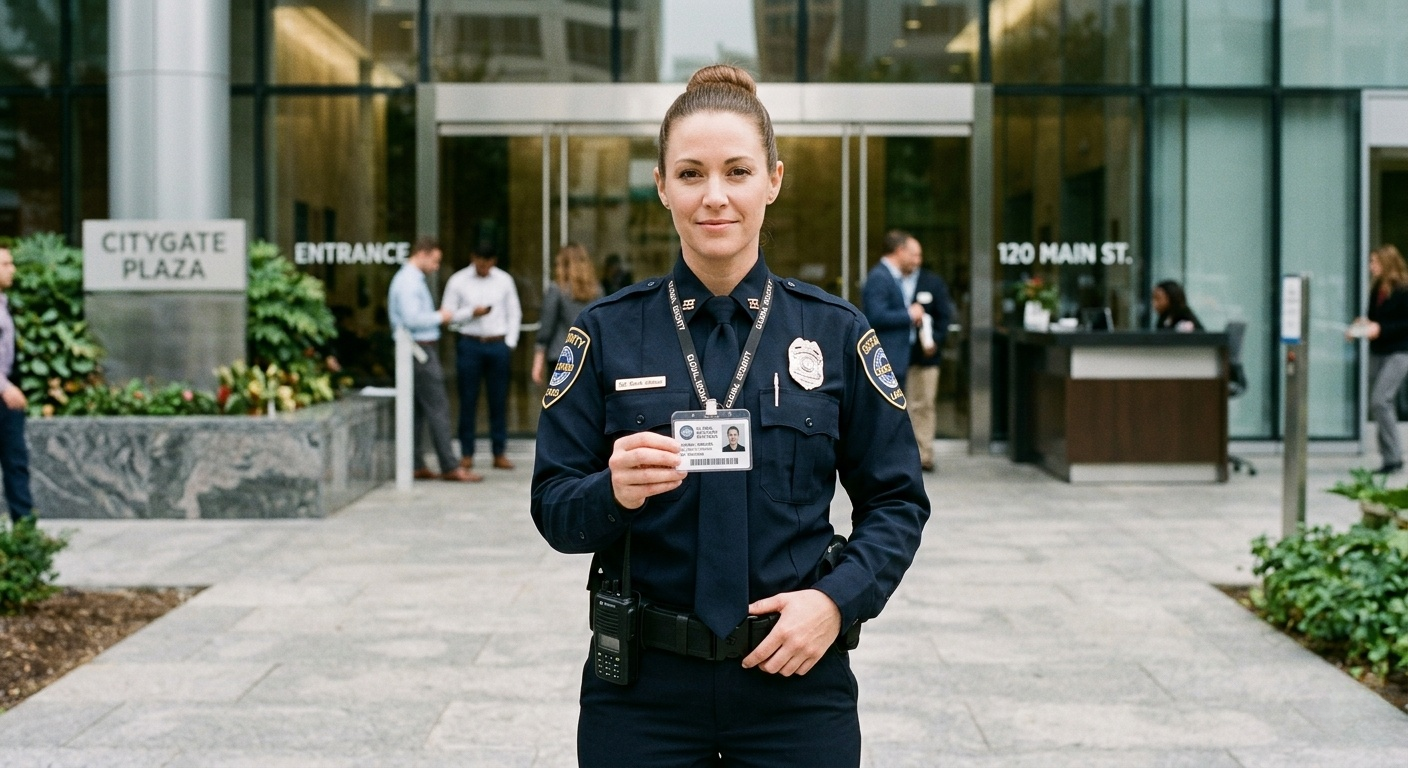
The guard card is a small plastic card with your photo, registration number, and expiration date. It must be carried while on duty.
Basic Eligibility Requirements
Before you apply, you must meet these minimum requirements:
- Age: 18 years or older
- Background: Pass a criminal background check (Live Scan fingerprinting)
- Training: Complete the 8-hour pre-application training course
- Legal status: Be legally authorized to work in the United States
- No disqualifying offenses: Certain felony or violent misdemeanor convictions within the past 10 years may disqualify you
California Guard Card Training Requirements (40 Hours Total)
California’s training is divided into three phases:
Phase 1: Pre-Application Training (8 Hours)
You must complete this before submitting your guard card application. Both courses must be taken from the same training provider within the same 6-month period.
| Course | Hours | What You Learn |
|---|---|---|
| Power to Arrest | 3 | Legal authority, citizen’s arrest procedures, use of reasonable force, liability, trespass law |
| Use of Force | 5 | Force continuum, de-escalation techniques, physical control, defensive tactics, legal limits |
Cost: $0-$100 depending on training provider. Some security companies offer free training to new hires.
Phase 2: First 30 Days After Hire (16 Hours)
Once hired by a security company, you must complete 16 additional hours of training within your first 30 days of employment.
| Course | Hours |
|---|---|
| Terrorism awareness | 4 |
| WMD awareness | 4 |
| Security officer skills | 8 |
Phase 3: Within 6 Months of Hire (16 Hours)
You must complete another 16 hours within your first 6 months of employment.
| Course | Hours |
|---|---|
| Public relations | 4 |
| Observation and documentation | 4 |
| Communication and conflict resolution | 4 |
| Elective (employer’s choice) | 4 |
Annual Continuing Education (8 Hours)
After completing all 40 hours of initial training, you must complete 8 hours of continuing education annually to keep your guard card active.
Total initial training: 40 hours over 6 months. Then 8 hours per year ongoing.
How to Apply for a California Guard Card (Step by Step)
Step 1: Complete Pre-Application Training
Find a BSIS-approved training provider and complete the 8-hour pre-application course (Power to Arrest + Use of Force). Keep your certificate of completion. You will need it.
Step 2: Get Live Scan Fingerprinting
Visit a Live Scan service center and get fingerprinted. You need the BSIS-specific Live Scan form (available on the BSIS website). The fingerprints go directly to the Department of Justice (DOJ) and the FBI for a criminal background check.
Cost breakdown: | Fee | Amount | |—–|——-:| | DOJ processing fee | $49 | | FBI processing fee | $0 (included for guard cards) | | Rolling site fee (varies by location) | $20-$40 | | Total Live Scan cost | $69-$89 |
Step 3: Create a BreEZe Account and Apply Online
Go to the BSIS BreEZe online portal (breeze.ca.gov), create an account, and submit your Guard Registration application.
You will need:
- Your training certificate (from Step 1)
- Your Live Scan receipt (from Step 2)
- A digital passport-style photo
- $60 application fee (credit card or electronic check)
Step 4: Wait for Processing
BSIS processes guard card applications within 3-6 weeks. You will receive your guard card by mail. Your registration number will also be searchable on the BSIS License Verification portal.
You cannot work as a security guard while your application is pending. Some employers will hire you for non-guard duties during this waiting period.
Total Cost to Get a California Guard Card
| Expense | Cost |
|---|---|
| Pre-application training (8 hours) | $0-$100 |
| Live Scan fingerprinting (DOJ + site fee) | $69-$89 |
| BSIS application fee | $60 |
| Passport photo | $10-$15 |
| Total | $139-$264 |
Many security companies reimburse these costs or offer free training to attract new hires.
Armed Guard Permit (Firearms Permit)
If you want to carry a firearm while on duty, you need a separate Firearms Permit from BSIS. This is in addition to your guard card.
Armed Guard Requirements:
| Requirement | Details |
|---|---|
| Valid guard card | Must be active before applying |
| Firearms training | 16-hour course from BSIS-approved instructor |
| Range qualification | Score 85%+ on BSIS-approved handgun course |
| Psychological assessment | Complete the 16PF questionnaire ($69 fee to BSIS) |
| Application fee | $80 |
| Requalification | Every 6 months (range test) |
Total additional cost for armed permit: $200-$350 on top of guard card costs.
How to Renew Your California Guard Card
California guard cards are valid for 2 years. Here is the renewal process:
- Complete your annual continuing education (8 hours/year)
- Log into BreEZe at least 60 days before your card expires
- Submit the renewal application
- Pay the $60 renewal fee
- Receive your renewed card by mail
If your card expires before you renew, you must stop working as a security guard immediately. You will need to reapply (not just renew) if you let it lapse beyond the grace period.
What Security Company Owners Need to Know
If you run a security company in California, you are responsible for ensuring every guard on your team has a valid guard card and completed training. BSIS can audit your company and fine you for non-compliance.
Your Compliance Responsibilities:
- Verify guard cards before assigning any security duties
- Track training completion for all three phases (8-hour, 16-hour, 16-hour)
- Monitor expiration dates and initiate renewals 60+ days early
- Maintain records of all training certificates and guard card numbers
- Report violations if a guard’s card is suspended or revoked
The Scale Problem
If you have 10 guards, tracking this manually is annoying but doable. At 50+ guards, it becomes a full-time compliance job. Expirations overlap, training deadlines stack up, and one missed renewal means a guard working illegally.
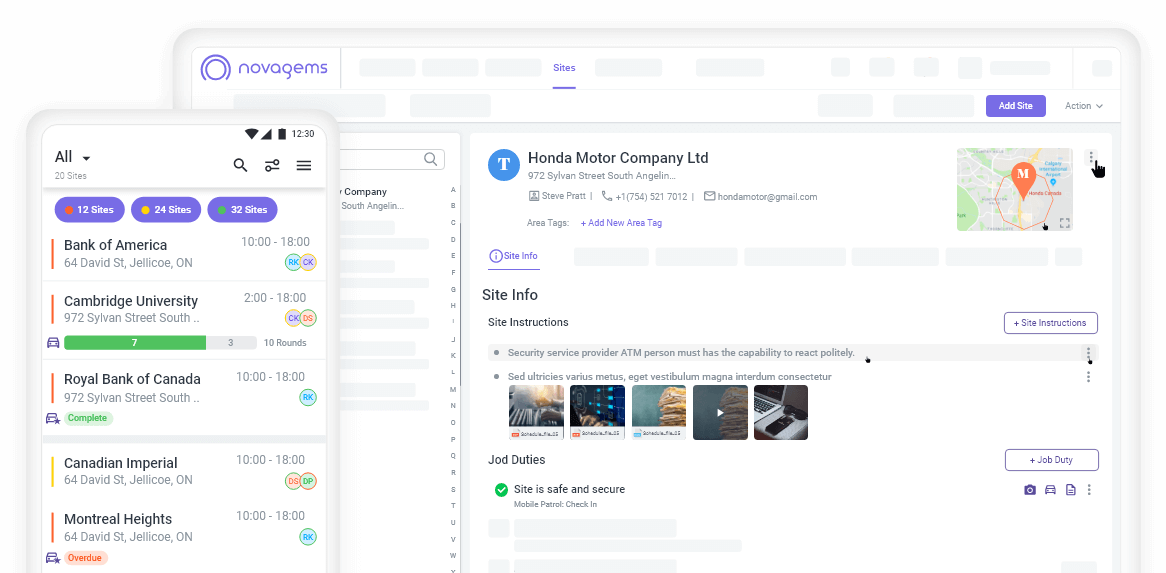
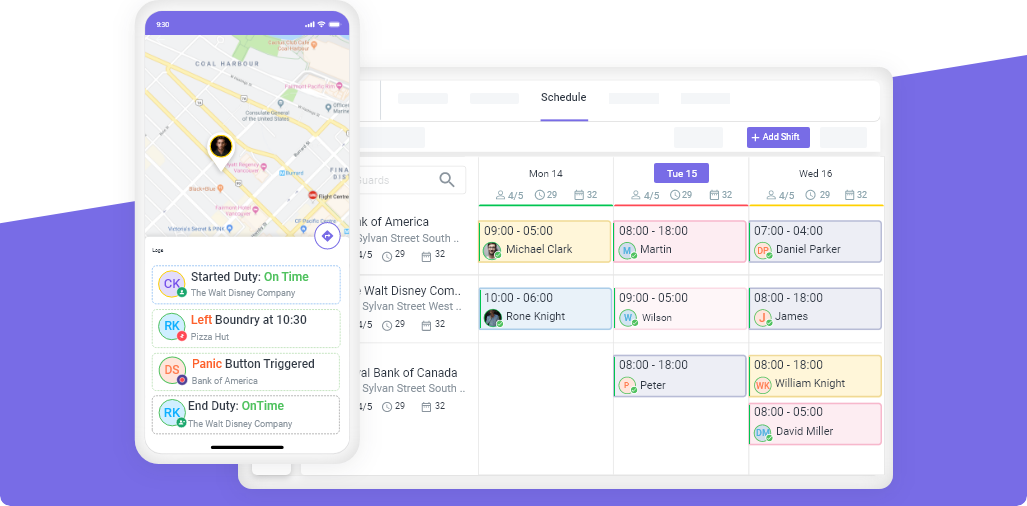
This is where workforce management software becomes essential. Novagems tracks every guard’s certifications, sends automated expiration alerts, and blocks scheduling for guards with expired credentials. You never have to manually check a spreadsheet again.
California vs Other States: How Requirements Compare
| California | Texas | Florida | New York | Nevada | |
|---|---|---|---|---|---|
| Training hours | 40 | 6 | 40 | 24 | 8 |
| Application fee | $60 | $35 | $75 | $36 | $50 |
| Background check | ✓ | ✓ | ✓ | ✓ | ✓ |
| Fingerprinting | ✓ (Live Scan) | ✓ | ✓ | ✓ | ✓ |
| Renewal period | 2 years | 2 years | 2 years | 2 years | 5 years |
| Armed extra training | 16 hrs + psych eval | Yes | Yes | Yes | Yes |
| Regulating body | BSIS | DPS | DLFS | DOS | PILB |
California and Florida tie for the highest training requirement (40 hours). California is unique in requiring a psychological evaluation for armed permits.
Common Mistakes to Avoid
1. Taking training from different providers. Both pre-application courses (Power to Arrest and Use of Force) must be from the same BSIS-approved provider and completed within the same 6-month period.
2. Working before your card arrives. You cannot perform any security guard duties until your physical guard card is issued. No exceptions.
3. Letting your card expire. If you miss the renewal window, you may need to reapply from scratch, including repeating training.
4. Not keeping training records. BSIS can audit your employer at any time. Keep copies of every training certificate.
5. Assuming your guard card works in other states. California guard cards are not transferable. If you move to Texas, you need a Texas security license.
Frequently Asked Questions
Where do I find BSIS-approved training providers?
BSIS maintains a list of approved training facilities on their website at bsis.ca.gov. You can search by city or zip code.
Can my employer pay for my guard card?
Many California security companies cover the cost of training and application fees for new hires. Ask during your interview. Companies that invest in guard card costs typically have lower turnover.
How do I check if my guard card is valid?
Use the BSIS License Verification tool on breeze.ca.gov. Enter your name or registration number to see your card status, expiration date, and any disciplinary actions.
Start Managing Guard Card Compliance Today
Tracking guard cards, training deadlines, and renewal dates for your entire team does not have to be a spreadsheet nightmare. Novagems automates certification tracking with expiration alerts, blocks scheduling for non-compliant guards, and keeps your company audit-ready at all times.
See Novagems in action
Join 500+ security & cleaning companies that replaced spreadsheets with Novagems.
✓ 14-day free trial · ✓ Free onboarding · ✓ Cancel anytime