Hospital and healthcare security services are specialized security operations protecting healthcare facilities, patients, staff, and assets from workplace violence, infant abduction, drug diversion, theft, and unauthorized access, through IAHSS-certified officers, controlled access systems, infant tracking technology, AI video analytics, and operational protocols compliant with CMS Conditions of Participation, HIPAA Security Rule, and Joint Commission accreditation standards. Hospitals operate under more regulatory pressure than almost any other security vertical: federal CMS funding tied to security compliance, the 2026 HIPAA Security Rule update taking effect this summer, EMTALA constraints in emergency departments, state workplace violence laws (CA SB 553, NY S6589), and Joint Commission audits. This guide covers everything hospital security directors, risk managers, and CMOs need in 2026: the threat landscape, service categories, IAHSS certification framework, pricing benchmarks, regulations, and how to hire a vendor that actually understands healthcare.
Here’s what’s keeping every hospital risk manager up at night in 2026: the American Hospital Association’s June 2025 report puts the annual cost of violence to US hospitals at $18.27 billion — $3.62 billion in prevention spending and $14.65 billion in post-event costs (healthcare for affected staff, work loss, case management, infrastructure repair). Healthcare workers now face workplace violence at 5 times the rate of other industries. A 2024 National Nurses United survey found that 81.6% of nurses experienced workplace violence in the past year. Almost half of all healthcare workers (45%) say they’re considering leaving their job in the next 12 months because of safety concerns. And only 26% of hospitals are rated “Leaders” on workplace violence preparedness.
The math is brutal. Workforce retention, regulatory compliance, patient safety, and operational continuity all now depend on having a security program that actually works, and most hospital security programs were built for the threat environment of 15 years ago, not the one operators face now.
This guide is written for hospital security directors, chief medical officers, risk managers, hospital association leadership, healthcare facility executives, and security company owners serving the healthcare vertical.
What Hospital & Healthcare Security Services Cover
Hospital security is broader than most operators outside healthcare realize. A complete program protects against multiple distinct threats across multiple distinct environments.
| Function | Threat Profile | Typical Coverage |
|---|---|---|
| Emergency Department | Workplace violence, drug-seeking, gang trauma, psychiatric crisis | 24/7 dedicated officer, often metal detection |
| Behavioral / Psychiatric | Patient violence, elopement, contraband, restraint events | 24/7 specialized officers, de-escalation focus |
| OB / Labor & Delivery | Infant abduction, custody disputes, post-partum visitors | Locked unit, infant tracking, Code Pink |
| Pediatrics | Custody verification, child protection, visitor screening | Locked unit, visitor escort |
| Oncology / Infusion | Controlled substance theft, patient property security | Drug-handling protocols, badging |
| Parking and perimeter | Assaults on staff, vehicle theft, shift-change escort | Mobile patrol, escort services |
| Visitor management | Unauthorized access, after-hours entry, banned individuals | Sign-in, photo badging, watchlists |
| Investigations | Internal theft, drug diversion, fraud, HIPAA breaches | In-house team + LE coordination |
| Code response | Code Pink (abduction), Code Gray (combative), Code Silver (active threat) | All officers + clinical staff coordination |
| Off-site facilities | Clinics, urgent care, medical office buildings | Mobile patrol, alarm response |
The work is more clinical-adjacent than any other security vertical. Hospital security officers regularly:
- De-escalate psychiatric crises (sometimes assisting with restraints)
- Help locate elopement risks (dementia, behavioral health)
- Witness disclosures of abuse or neglect
- Handle medical emergencies until clinical staff arrive
- Coordinate with social workers on domestic violence cases
- Process controlled-substance discrepancies
This is why generic security guards rarely work in hospitals. The job requires healthcare-specific training, clinical workflow understanding, and the temperament for an environment where the people you’re protecting are often the people threatening you.
The Workplace Violence Crisis — 2025 Data
Understanding the scale matters because it’s reshaping every other decision. The American Hospital Association’s 2025 Burden of Violence report and supporting research provide the clearest picture in years.
The Headline Numbers
| Metric | Value | Source |
|---|---|---|
| Annual cost of violence to US hospitals | $18.27 billion | AHA 2025 |
| Pre-event prevention spending | $3.62 billion | AHA 2025 |
| Post-event costs (care, work loss, repair) | $14.65 billion | AHA 2025 |
| Healthcare workplace violence rate | 5x other industries | BLS, AHA |
| Nurses experiencing violence (last year) | 81.6% | NNU 2024 survey |
| Healthcare workers likely to leave job | 45% | various 2024-2025 surveys |
| Hospitals at “Leaders” prep level | 26% | CPI 2025 report |
Why Violence Is Rising
Multiple converging factors:
- Mental health crisis post-COVID, psychiatric beds disappeared in the 1990s-2010s; emergency departments are now the de facto mental health system, with patients waiting days for placement
- Drug crisis, methamphetamine, fentanyl, and synthetic stimulants drive aggressive behavior and unpredictable presentations
- ED overcrowding, patients waiting 6-12 hours grow frustrated; family members lose patience
- Healthcare worker burnout, under-staffed clinical teams have less bandwidth for de-escalation
- Social media, disputes that started elsewhere arrive at the hospital with the patient
- Distrust of institutions, pandemic-era polarization carries into clinical encounters
The Workforce Retention Crisis
The most underappreciated consequence: violence is driving experienced clinicians out of the profession. When 81.6% of nurses experience workplace violence and 45% are considering leaving, hospitals lose decades of experience and pay 2-4x to recruit replacements, for whom the same conditions await.
Hospital security is now a workforce retention strategy, not just a safety program. A nurse who feels safe stays; a nurse who’s been assaulted twice doesn’t.
Construction Trend Data
A 2026 healthcare construction survey found design priorities are shifting heavily toward security:
| Priority | % of New Construction Including |
|---|---|
| Infant abduction prevention | 82% |
| Staff assault prevention | 77% |
| Cybersecurity | 72% |
These percentages were under 50% just five years ago. The CFO objections that used to block security investments are gone, boards now require it.
Service Categories Within Healthcare Security
Different hospital departments need fundamentally different security approaches. The same officer can’t serve all of them.
Emergency Department (ED)
Threat profile: The single highest-risk environment in any hospital. Walk-in psychiatric crises, drug-impaired patients, gang-related trauma, intoxicated visitors, family disputes.
Recommended setup:
- 24/7 dedicated security officer (often 2 during peak hours)
- Metal detection at primary entry (controversial but increasingly common)
- Camera coverage with AI video analytics
- Direct line to local police
- De-escalation-trained staff
- Code Gray response protocols
Cost driver: This is your highest-cost coverage area. Expect $200K-$600K annually for 24/7 ED security alone.
Behavioral / Psychiatric Units
Threat profile: Patient elopement, patient-on-staff assault, restraint events, contraband.
Recommended setup:
- 24/7 specialized officers with de-escalation certification
- Sometimes 1:1 sitter coordination with clinical staff
- No firearms in unit
- Locked door procedures with badging
- Restraint-event response protocols
Cost driver: Specialized training adds $5-$10/hour over standard rates. 24/7 coverage runs $250K-$700K annually.
OB / Labor & Delivery
Threat profile: Infant abduction (rare but catastrophic), custody disputes between separated parents, post-partum stalking situations.
Recommended setup:
- Locked unit with badge entry
- Electronic infant security system (RFID or infrared tags trigger alarms at exits)
- Code Pink response protocol
- Visitor verification matched to mother’s authorized list
- CMS-required dual ID protocol (matching ID bands + footprint)
Cost driver: Infant tracking systems are typically $50,000-$200,000 capital plus monthly fees. Personnel costs are folded into general security budget.
Pediatrics
Threat profile: Custody disputes, suspected child abuse cases, parental distress, mistaken identity.
Recommended setup:
- Locked unit with badge entry
- Visitor screening matched to authorized list
- Coordination with social work for custody/abuse cases
- After-hours entry control
Cost driver: Lower per-bed than OB or behavioral health.
Oncology and Infusion
Threat profile: Controlled substance theft (chemo includes opioids), patient property security, occasional emotional escalation around end-of-life decisions.
Recommended setup:
- Drug handling protocols with security oversight
- Coordination with pharmacy and clinical staff
- Standard hospital security staffing
- Investigation capability for diversion incidents
Parking and Perimeter
Threat profile: Staff assaults during shift changes (especially overnight), vehicle theft, after-hours unauthorized entry.
Recommended setup:
- Mobile patrol on documented routes (GPS-verified)
- Escort service on request for staff
- Lighting standards matched to BLS guidelines
- Emergency call boxes / blue lights
- Coordination with municipal police
Visitor Management
Modern hospitals run digital visitor management at every entry:
- Government-issued ID scan
- Photo capture
- Patient authorization check
- Sex offender / banned-list screening
- Time-limited badge with expiration
- Integration with patient records (HIPAA-compliant)
Most large hospitals have moved away from paper sign-in entirely.
Investigations
In-house investigation teams handle:
- Drug diversion (clinical staff stealing controlled substances)
- Internal theft
- HIPAA-related physical security breaches
- Workplace violence incident investigation
- Patient/staff complaint investigation
- Coordination with law enforcement for criminal cases
Healthcare Security Pricing in 2026
Hourly Rates
| Service Level | Hourly Rate |
|---|---|
| Standard unarmed hospital officer | $20-$32 |
| ED-specialized officer | $25-$38 |
| Behavioral health unit officer | $28-$40 |
| Armed officer (rare in hospitals) | $32-$48 |
| Off-duty police (when used) | $75-$150 |
| K-9 unit (rare for hospitals) | $75-$125 |
| Supervisor / account manager | $40-$60 |
Annual Cost by Hospital Size
| Hospital Size | Annual Security Spend |
|---|---|
| Small community hospital (under 100 beds) | $200,000-$600,000 |
| Mid-size hospital (100-300 beds) | $600,000-$2,000,000 |
| Large regional medical center (300-700 beds) | $2,000,000-$8,000,000 |
| Major academic medical center (700+ beds) | $8,000,000-$25,000,000+ |
These figures cover physical security personnel, technology, vendor management, and operations. They do not include cybersecurity, fraud prevention, or off-site clinic coverage.
Cost Factors That Move the Needle
| Factor | Impact |
|---|---|
| 24/7 ED coverage | $200K-$600K per ED post |
| Behavioral health unit coverage | $250K-$700K per locked unit |
| Infant tracking system installation | $50K-$200K capital + monthly |
| ED metal detection | $30K-$80K capital + 1 dedicated officer |
| IAHSS certification across all officers | +5-10% per hour |
| Major metro location (NYC, SF, Boston) | +20-30% over national average |
| Trauma center designation | +10-15% |
| Off-site clinic coverage | $50K-$300K per clinic |
For complete pricing methodology, see our How to Price Security Guard Contracts guide.
IAHSS. The Healthcare Security Standard
The International Association for Healthcare Security and Safety (IAHSS) is the standard-setting body for the entire vertical. Any hospital security program without IAHSS-certified leadership is operating below industry standard.
Certification Pathway
| Credential | Audience | Approximate Cost |
|---|---|---|
| Healthcare Safety Certificate | Entry-level | $45 exam |
| Basic CHSO (Certified Healthcare Security Officer) | Field officers | $50-$150 |
| Advanced CHSO | Experienced officers, leads | $75-$200 |
| CHPA (Certified Healthcare Protection Administrator) | Department heads | $450 IAHSS members / $525 non-members |
| CIPM (Certified Institutional Protection Manager) | Senior leadership | Similar tier |
Recertification is required every 3 years and includes continuing education hours.
What IAHSS Certification Covers
The curriculum addresses healthcare-specific topics that generic guard training doesn’t:
- Healthcare environment and culture
- Patient rights and HIPAA awareness
- Workplace violence in clinical settings
- Behavioral health emergencies and de-escalation
- Restraint and seclusion protocols
- Infant abduction prevention and Code Pink
- Active shooter in healthcare
- Drug diversion investigation
- Joint Commission and CMS standards
- EMTALA and patient access law
Why IAHSS Matters for Vendor Selection
When evaluating a security vendor, the question isn’t “do you have IAHSS-certified people”, it’s “what percentage of officers assigned to my facility are IAHSS certified, and what’s your timeline to certify the rest?” Best practice: 100% Basic CHSO within 90 days of hire, leadership at CHPA, recertifications tracked and current.
The Regulatory Framework
Hospital security operates inside a denser regulatory environment than nearly any other security vertical.
CMS Conditions of Participation
The Centers for Medicare and Medicaid Services (CMS) sets Conditions of Participation that hospitals must meet to receive Medicare/Medicaid funding. Multiple sections touch security:
- 42 CFR 482.13. Patient rights, including freedom from abuse
- 42 CFR 482.41. Physical environment standards
- 42 CFR 482.43. Discharge planning (including workplace violence considerations)
- Specific infant abduction prevention requirements including dual ID
CMS audits and surveyors regularly review security program documentation. A failed survey can suspend Medicare/Medicaid reimbursement, effectively closing a hospital that depends on government payers.
HIPAA Security Rule (2026 Update)
The HHS HIPAA Security Rule is being significantly updated in 2026, finalized in May, taking effect July or August 2026. While much attention focuses on technical controls (mandatory MFA for ePHI access, enhanced encryption), the rule strengthens physical safeguards under 164.310:
- Facility access controls, limiting physical access to systems containing ePHI
- Workstation security, physical positioning of workstations and access policies
- Device and media controls, tracking and disposal of equipment containing ePHI
Hospital security teams must coordinate with IT and HIPAA officers on:
- Visitor logging at sensitive areas (server rooms, medical records, billing)
- Badge access at clinical workstations
- Physical incident documentation that could compromise ePHI
- Annual physical security risk assessment as part of HIPAA compliance
Joint Commission Accreditation
The Joint Commission (TJC) is the dominant US hospital accreditation body. Its standards include:
- Environment of Care (EC) Chapter, physical safety standards
- Workplace violence prevention standards (effective 2022, expanded 2024-2025)
- Documentation of staff training
- Annual security risk assessment
- Code response protocols (Code Pink, Code Gray, Code Silver)
Loss of TJC accreditation has the same effect as a CMS deficiency. Medicare/Medicaid funding suspension.
OSHA Workplace Violence Guidelines
OSHA Guidelines for Preventing Workplace Violence for Healthcare and Social Service Workers (publication 3148) provide federal direction. Many state-level workplace violence laws cite OSHA standards.
State Workplace Violence Laws
| State | Law | Key Requirement |
|---|---|---|
| California | SB 553 (effective 2024) | Workplace violence prevention plan, training, recordkeeping |
| New York | S6589 (effective 2025) | Hospital workplace violence prevention plan |
| Washington | WAC 296-360 | Healthcare workplace violence rules |
| Maryland | Hospital Workplace Violence Act | Mandatory reporting, prevention plans |
| Texas | HB 76 | Healthcare worker assault is a felony |
| Florida | Various | Hospital worker assault penalties |
States increasingly mandate prevention plans, training, recordkeeping, and reporting. Compliance documentation is non-negotiable.
EMTALA Implications
The Emergency Medical Treatment and Active Labor Act (EMTALA) requires hospitals to:
- Provide medical screening to anyone presenting at the ED
- Stabilize emergency conditions before transfer
- Cannot refuse care based on ability to pay or insurance
For security operations, EMTALA means:
- ED security cannot turn away patients (even known troublemakers)
- Metal detection must allow patient access
- De-escalation, not exclusion, is the primary tool
- Banned individuals must still receive emergency care
This is why ED security is so much harder than other commercial security, you can’t lock the door.
State Licensing for Personnel
Beyond healthcare-specific regulations, every officer must hold valid state security licensing in their operating state. For multi-state hospital systems, every officer at every facility must be properly credentialed.
Technology Stack for Modern Hospital Security
Healthcare security technology has evolved rapidly. A 2026 program layers:
AI Video Analytics
Modern AI video systems automatically detect:
- Weapons (knives, firearms) in ED waiting areas
- Loitering near restricted areas
- Falls (medical emergency, especially with elderly patients)
- Combative behavior in waiting rooms
- Tailgating into secure units
- Unattended patients in psychiatric areas
- Unusual movement patterns at infant security boundaries
Integration with the security operations center allows real-time alerting.
Infant Security Systems (Hugs, MyChild, etc.)
Electronic infant tracking uses RFID or IR tags attached to the infant. Attempting to remove the tag or carrying the infant past a secure exit triggers:
- Audible alarm at the exit
- Lockdown of nursery area
- Notification to security operations
- Code Pink dispatch
- Camera capture of the abduction attempt
These systems are now table stakes for any OB/L&D unit.
Visitor Management Systems
Replacing paper sign-in:
- Government-issued ID scan with photo capture
- Cross-reference against banned individuals and sex offender registries
- Integration with patient information for visitor authorization
- Time-limited badges with expiration
- HIPAA-compliant data handling
Access Control with Badging
- Badge-controlled entry to all clinical units (especially OB, behavioral health, pediatrics)
- Mantraps at high-security areas (medication rooms, IT closets, server rooms)
- After-hours zone restrictions
- Audit trails for HIPAA compliance
GPS-Tracked Patrols
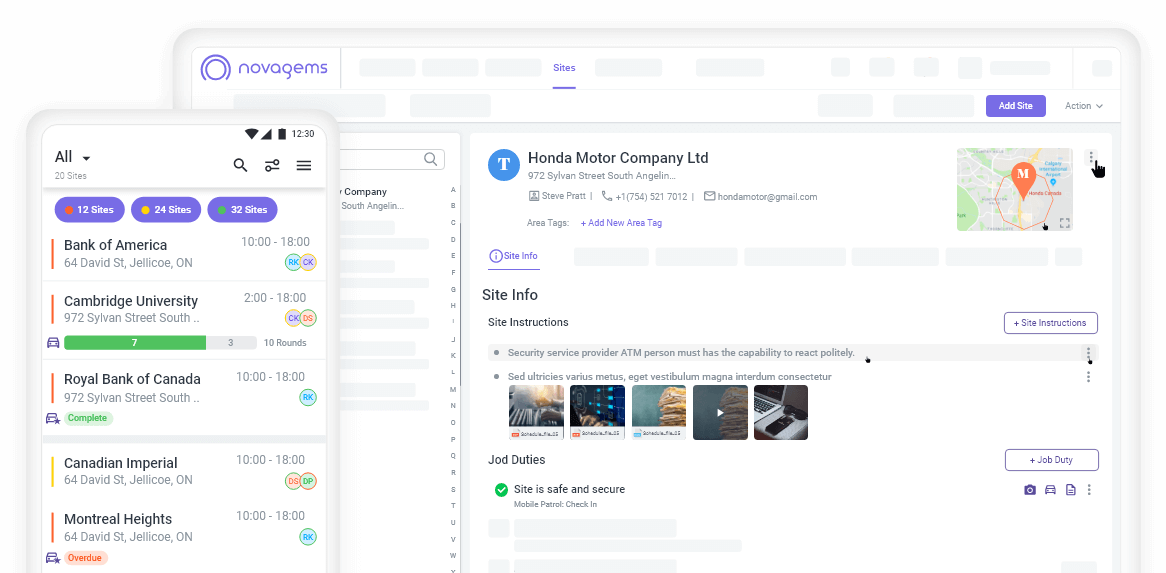
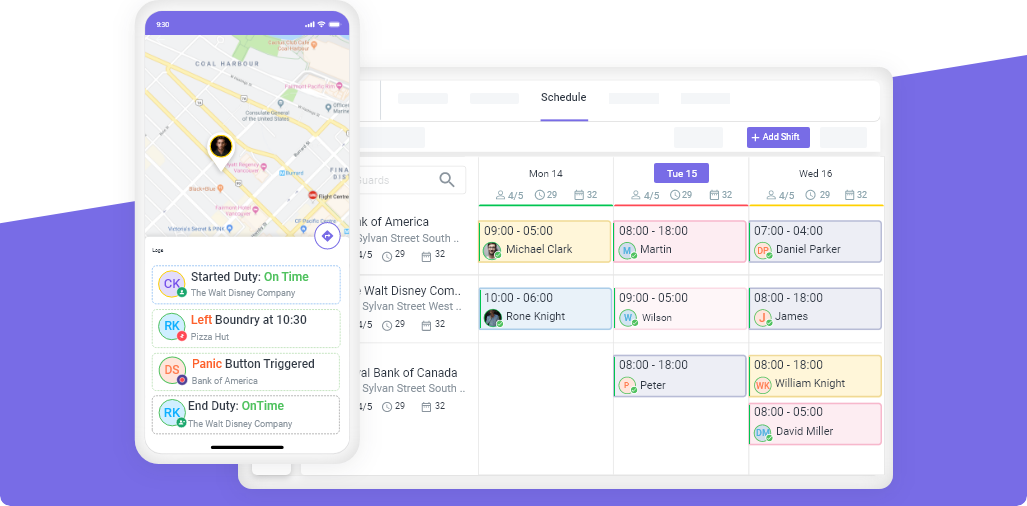
Modern hospital security companies use platforms like Novagems to:
- Track every patrol on every shift
- Verify guards visited every required checkpoint
- Generate Joint Commission audit-ready documentation
- Provide hospital administration with real-time dashboards
- Integrate with GPS tracking for coverage verification
For perimeter and parking patrol, NFC checkpoint tags at fixed locations prevent fake patrols.
Code Response Systems
Most hospitals use coded overhead announcements:
- Code Pink, infant abduction
- Code Gray, combative person
- Code Silver, active shooter / weapon threat
- Code Adam, child abduction (older child)
- Code Yellow, bomb threat
- Code Black, bomb / hostage situation
Each code triggers a documented response protocol. Modern systems include push notifications to security officer mobile devices in addition to overhead announcements.
Drone-as-First-Responder for Large Campuses
Major academic medical centers with multiple buildings on a campus increasingly use drone-as-first-responder for outdoor incidents. See our guards vs robots vs drones breakdown.
Behavioral Health Security. Special Considerations
Behavioral health is the most specialized hospital security environment. The threat profile is fundamentally different from the rest of the hospital.
Why It’s Different
- Patients may be involuntarily held (psychiatric hold)
- Patients may be experiencing acute psychosis, mania, or severe agitation
- The presence of a uniformed guard can escalate situations
- De-escalation, not enforcement, is the primary tool
- Restraint events have legal and ethical complications
- Suicide prevention is constant
Best Practices
- Specialized training, beyond generic security, officers need specific behavioral health crisis training (often Crisis Prevention Institute (CPI) or Mandt System certified)
- Soft-uniform appearance, many programs use polo shirts and khakis instead of police-style uniforms
- No firearms or batons in the unit
- Sitter coordination, security backs up clinical 1:1 sitters rather than replacing them
- Restraint protocols, strict adherence to clinical orders, no improvised restraint
- Trauma-informed approach, many psychiatric patients have histories of trauma; aggressive security responses retraumatize and worsen outcomes
- Documentation, every interaction documented for clinical and legal purposes
The hospitals that get this right have lower rates of violent incidents, lower restraint use, and better patient outcomes.
Emergency Department Metal Detectors
Metal detection at ED entrances is the most controversial security trend in 2026 healthcare.
Pros
- Reduces weapons entering the ED
- Visible deterrence
- Faster response when weapons are detected
- Insurance discounts at some carriers
Cons
- EMTALA constraints, must allow patient access regardless of detection
- Patient access delays for medical emergencies
- Privacy concerns
- Cost ($30K-$80K capital plus dedicated officer)
- May not detect ceramic or 3D-printed weapons
- Patient experience impact (perceived as policing)
Implementation Considerations
If implementing:
- Don’t block patient access, separate fast lane for active medical emergencies
- Pair with trained officer (not just a machine)
- Plan for rate of detection (most weapons found are knives, not firearms)
- Document detected items per Joint Commission and HIPAA
- Coordinate with local law enforcement on response
- Train staff on protocol when alarm activates
Some hospitals have removed metal detection after community backlash; others credit it with measurable violence reductions. There’s no universal answer.
How to Hire a Healthcare Security Vendor
Healthcare security vendor selection requires more rigor than other verticals due to clinical complexity, regulatory exposure, and the workforce retention stakes.
Step 1. Risk Assessment
Document the threat profile of every facility:
- Total patient volume and acuity
- ED volume and trauma center designation
- Behavioral health bed count
- OB/L&D bed count
- Pediatric services
- Geographic risk (urban vs rural, crime rate)
- Historical incidents
- Joint Commission and CMS findings
- Insurance carrier requirements
Step 2. Scope Document
Write a detailed scope (often 4-6 pages) covering:
- Facility-by-facility security needs
- Hours of coverage by department
- Armed vs unarmed (almost always unarmed for hospitals)
- Specialized training requirements (IAHSS, CPI, Mandt, ED-specific)
- Joint Commission and CMS compliance documentation
- Code response protocols
- Reporting cadence and format
- Technology integration requirements
Step 3. RFP to Qualified Vendors
Healthcare-specific must-requirements:
| Requirement | Why |
|---|---|
| 3+ active hospital clients | Healthcare-specific experience |
| IAHSS-certified leadership | Industry standard |
| 100% officer IAHSS certification within 90 days | Industry best practice |
| CPI / Mandt / similar de-escalation training | Behavioral health requirement |
| State licensing in every operating state | Legal requirement |
| Insurance — $5M+ general liability, professional liability | Healthcare risk profile |
| Joint Commission audit experience | Hospital accreditation support |
| Background checks beyond state minimum | Patient safety standard |
| Healthcare-specific training documentation | Audit-ready |
| Technology integration with hospital systems | Modern operations |
| Workforce retention rate above 60% annual | Quality signal |
| HIPAA training and confidentiality | Federal requirement |
Step 4. Evaluate Beyond Price
| Criterion | Weight |
|---|---|
| Healthcare-sector experience | 25% |
| IAHSS and de-escalation training | 20% |
| Joint Commission/CMS audit support | 15% |
| Technology stack | 15% |
| Supervisor structure | 10% |
| Insurance and licensing | 10% |
| Pricing transparency | 5% |
Step 5. Pilot Period
Sign a 90-day pilot at one facility before multi-year master agreement. Track:
- Officer IAHSS certification percentage
- Code response time
- Incident documentation quality
- Joint Commission audit prep readiness
- Clinical staff feedback (most important, they work with security officers daily)
Common Hospital Security Mistakes
| # | Mistake | Fix |
|---|---|---|
| 1 | Generic security vendor without hospital experience | Demand 3+ similar references |
| 2 | No IAHSS certification across the team | Require 100% Basic CHSO within 90 days |
| 3 | Same officers in ED and behavioral health | Specialized assignment with proper training |
| 4 | Paper-only patrol logs | Move to GPS-verified digital |
| 5 | Armed officers in clinical areas | Almost never appropriate; review with risk team |
| 6 | No Joint Commission audit prep documentation | Quarterly review of program documentation |
| 7 | Outdated infant security systems | Capital upgrade to current RFID/IR standard |
| 8 | No visitor management system at major entries | Digital systems with photo and registry checks |
| 9 | Treating security as separate from clinical operations | Integrate with nurse manager and HR retention strategy |
| 10 | Reactive only, no annual risk assessment | Annual third-party security risk assessment |
Getting Started Checklist
For a new hospital security director or risk manager:
- Assess current state, every facility, every department, every shift; what’s the actual coverage?
- Review last 3 years of incidents, what’s the threat pattern?
- Review Joint Commission and CMS findings, what’s been flagged?
- Verify state workplace violence law compliance. CA SB 553, NY S6589, etc.
- Audit IAHSS certification, what % of officers are credentialed?
- Check infant security systems, current technology generation?
- Review visitor management, paper or digital?
- HIPAA physical safeguards review, coordinate with HIPAA officer for 2026 update
- Insurance carrier discussion, what does your carrier require / discount?
- Staff feedback, survey nurses on safety concerns; their answers are your roadmap
The Workforce Connection
The biggest strategic shift in 2026 hospital security is recognizing it as a workforce retention strategy, not just a safety program.
When 81.6% of nurses experience workplace violence and 45% are considering leaving, every dollar saved by under-investing in security is paid back 10x in nurse turnover costs. A registered nurse costs $40,000-$80,000 to replace including recruiting, onboarding, and lost productivity. Saving $200K/year on security to lose 5 nurses to safety concerns is not a cost saving, it’s a $200K-$400K loss.
Hospital boards that understand this are increasingly approving security budgets that would have been rejected five years ago. Security directors who frame their budget requests around workforce retention rather than just safety see budgets approved that pure safety arguments wouldn’t.
Wrapping Up
Hospital security is the most complex security vertical in the United States. The combination of CMS regulations, HIPAA Security Rule (with the 2026 update finalizing in May), Joint Commission accreditation, EMTALA constraints, state workplace violence laws, IAHSS standards, and the workplace violence crisis itself create a regulatory and operational environment that requires specialized expertise.
The hospitals winning at security in 2026 share three patterns: they invest in IAHSS-certified personnel and modern technology that documents compliance automatically; they treat security as integrated with nursing retention, clinical operations, and HIPAA, not a separate silo; and they demand vendors with documented healthcare experience, not the cheapest available bid.
For security company owners considering the healthcare vertical: it’s high-margin, high-retention, and rewarding work, but the bar is real. IAHSS certification, behavioral health training, Joint Commission documentation, and HIPAA compliance are non-negotiable. If you can deliver those, hospital contracts are some of the most stable revenue in the security industry.
For hospital risk managers and security directors: ask your security vendor for current IAHSS certification rosters, last Joint Commission survey documentation, and 2025 incident reports comparing your facility to industry benchmarks. If they can’t produce all three within a week, you have a vendor gap.
Novagems provides the workforce management platform that healthcare security companies use to deliver IAHSS-aligned, audit-ready, technology-verified operations. Start a 14-day free trial and see how modern hospital security operations work.
Further Reading
- Types of Security Guard Services: A Complete Guide, pillar covering all security service categories
- Bank Security Services: 2026 Compliance Guide, adjacent regulated vertical
- Warehouse Security Services: 2026 Guide, industrial parallel
- School & Campus Security Services: 2026 Guide, institutional security parallel
- How to Price Security Guard Contracts, full pricing framework
- AI in the Security Guard Industry (2026). AI video analytics for ED
- Security Guards vs Robots vs Drones, drone-as-first-responder for large campuses
- GPS Tracking and Geofencing, verified patrol documentation
- NFC Tags for Guard Tours, checkpoint verification
- Workforce Management for Security Companies, operations platform
Sources: AHA Burden of Violence to US Hospitals (June 2025); National Nurses United 2024 Survey; Crisis Prevention Institute 2025 Workplace Violence Prevention Report; IAHSS training and certification programs; HHS HIPAA Security Rule; CMS Conditions of Participation; The Joint Commission accreditation standards.
See Novagems in action
Join 500+ security & cleaning companies that replaced spreadsheets with Novagems.
✓ 14-day free trial · ✓ Free onboarding · ✓ Cancel anytime