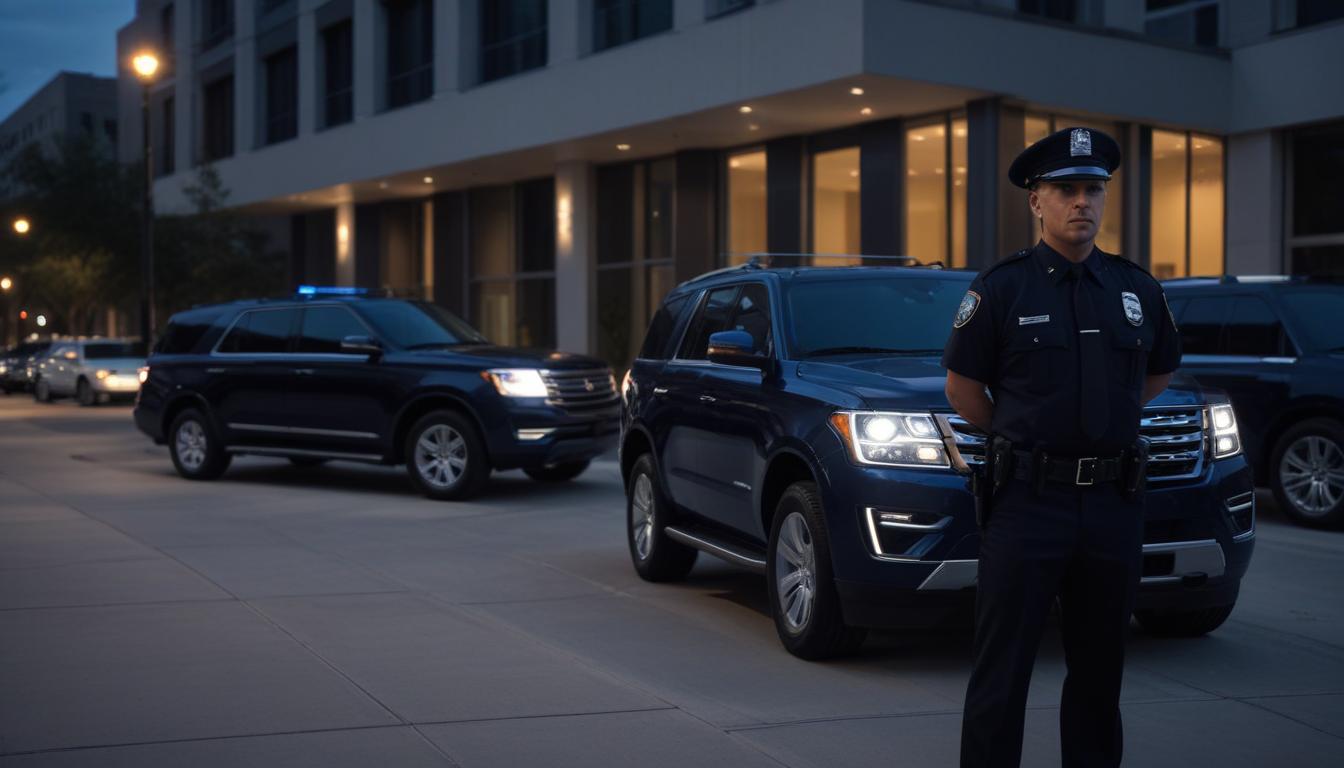
Mobile patrol services are scheduled or on-demand security patrols where guards travel between multiple client sites in a vehicle, performing exterior checks, alarm response, lock-up verification, and incident documentation across 15-25 properties per shift with randomized timing and GPS-verified logs. Mobile patrol is the most cost-effective security option for sites that need verified presence without a dedicated 24/7 guard: HOAs, small commercial properties, construction sites, after-hours facilities, parking lots, and gated communities. This guide covers what mobile patrol actually does, 2026 pricing ($300-$2,000/month per site depending on frequency), how to verify patrols actually happened (GPS + checkpoint scanning), regulations, and how to evaluate vendors.
The biggest secret in mobile patrol: 30-50% of paper-logged patrols may never have actually happened. Industry insiders have known this for decades, it’s why the entire vertical has been transformed by GPS tracking, NFC checkpoints, and digital reporting. The gap between “what was billed” and “what was actually patrolled” used to be the source of every HOA board complaint, every property manager frustration, and every client cancellation. Modern technology makes verification trivial, but only if your vendor uses it.
This guide is for HOA boards, property managers, small business owners, construction project managers, and security company owners, anyone who needs a clear picture of what mobile patrol does, what it should cost, and how to make sure you’re actually getting what you pay for.
What Mobile Patrol Services Cover
Mobile patrol is a deceptively simple service with a lot of variation underneath. A complete service offering includes:
| Function | What It Covers |
|---|---|
| Scheduled exterior patrols | Routine drive-throughs and walking checks |
| Alarm response | Dispatch to triggered alarms (intrusion, fire, panic) |
| Lock-up verification | Confirming doors locked at end of business hours |
| Property condition reports | Vandalism, damage, maintenance issues |
| After-hours opening/closing | Verifying authorized opening or closing of facilities |
| Parking lot checks | Vehicle observation, permit enforcement |
| Trespass notification | Flagging unauthorized persons or vehicles |
| Emergency response coordination | Fire, medical, weather, first on scene |
| Documentation | Incident reports with photos, timestamps, GPS |
| Welfare checks | Property owner-requested checks on residents/staff |
The service ranges from “drive past every 4 hours” to “full perimeter walk with checkpoint scanning every 90 minutes.” Pricing reflects the difference.
How Mobile Patrol Actually Works
Understanding the operational model helps explain the pricing.
Route Construction
A mobile patrol vendor builds patrol routes that balance:
- Client distribution, sites need to be geographically clustered (10-25 mile radius)
- Coverage requirements, each site’s contracted visit frequency
- Randomization, visits at different times each night to prevent predictability
- Alarm response capability, patrols can divert to alarm calls
- Geographic efficiency, minimize unnecessary driving
A typical patrol officer covers 15-25 client sites per shift, with each site receiving 2-6 visits per night.
Visit Patterns
Visit duration varies by service tier:
| Tier | Per-Visit Duration | What’s Done |
|---|---|---|
| Drive-through | 2-5 min | Visual exterior check from vehicle, document timestamp |
| Standard patrol | 5-10 min | Vehicle exterior loop, key checkpoint visit |
| Full perimeter | 10-20 min | Walking perimeter, all checkpoints scanned, photo documentation |
| Lock-up / opening | 15-30 min | Detailed door/window verification |
Geographic Coverage
A typical mobile patrol shift covers:
- 100-200 miles of total driving
- 15-25 client sites
- 60-150 individual visits across the shift
- 8-12 hour shift duration
Why It’s Cost-Effective
The economics work because the patrol officer’s $25-$35/hour cost is split across 15-25 client sites. If the officer makes $25/hour and covers 20 sites, the per-site labor cost is roughly $1.25/hour or $1,000/month per site for full overnight coverage, but each individual site is only paying for their 2-6 visits per night, not the full hour.
This is why mobile patrol costs 5-15% of dedicated static guard cost while still providing meaningful security presence.
Mobile Patrol Pricing in 2026
By Visit Frequency
| Patrol Frequency | Monthly Cost (per site) |
|---|---|
| 1-2 patrols per night | $300-$600 |
| 3-4 patrols per night | $600-$1,200 |
| 5-6 patrols per night | $1,200-$2,000 |
| Hourly patrols (8-12/night) | $2,000-$4,000 |
By Service Type
| Service | Cost |
|---|---|
| Per-visit alarm response | $50-$150 per dispatch |
| Emergency call-out | $150-$300 per dispatch |
| Lock-up verification | $200-$500/month |
| Welfare check | $35-$75 per check |
| After-hours opening | $100-$250 per opening |
| Real-time incident response (under 30 min) | $200-$500 per incident |
What Drives Pricing Up
| Factor | Impact |
|---|---|
| Major metro area | +20-30% |
| Remote / rural sites | +30-50% (lower route density) |
| Holidays / weekends | +25-50% |
| Specific arrival time requirements (vs randomized) | +25-40% |
| Armed mobile patrol | +50-100% |
| Specialized site (high-risk industry) | +25-50% |
For complete pricing methodology, see our How to Price Security Guard Contracts.
Where Mobile Patrol Makes Sense
HOAs and Gated Communities
Best fit: Communities under 500 homes that don’t justify 24/7 dedicated staffing.
Setup: 3-6 patrols/night with checkpoint scanning at gate, pool, clubhouse, mail room.
Cost: $1,000-$2,000/month.
For broader coverage, see Residential Security Services.
Apartment Complexes
Best fit: Properties under 300 units, evening hours focus (8pm-1am).
Setup: 3-5 patrols per evening covering parking, mail facility, common areas.
Cost: $1,500-$3,500/month.
Small Commercial / Strip Mall
Best fit: Multi-tenant retail where after-hours security covers vandalism and trespass.
Setup: 2-4 patrols/night during closed hours.
Cost: $500-$1,200/month.
Construction Sites
Best fit: Active construction sites with overnight equipment exposure.
Setup: 4-8 patrols/night during overnight hours, often paired with daytime static guard.
Cost: $1,200-$3,000/month. See Construction Site Security.
Office Parks / Business Campuses
Best fit: After-hours coverage of multi-building campuses.
Setup: 3-5 patrols/night with full perimeter walks at primary buildings.
Cost: $1,500-$4,000/month.
Self-Storage Facilities
Best fit: Smaller storage facilities supplementing camera-only systems.
Setup: 2-4 patrols/night with gate and unit-row verification.
Cost: $500-$1,500/month.
After-Hours Schools and Universities
Best fit: Nighttime supplement to in-house campus security.
Setup: 2-4 patrols/night focused on parking lots, athletic facilities, perimeter.
Cost: $1,000-$2,500/month. See School & Campus Security.
The Verification Problem (and Why GPS Tracking Solved It)
The single biggest issue in mobile patrol historically was that clients couldn’t verify the work was actually done.
How Patrol Fraud Worked
A patrol officer with 20 client sites and a paper log could:
- Skip 30-50% of visits and hand-write fake entries
- Drive past sites without stopping (easy to fake “exterior check”)
- Forget to visit but document anyway
- Visit only the easy/close sites and skip the others
- Sign in for a coworker who actually did the route
- Submit photo from previous night as “tonight’s check”
Many security companies tolerated this for decades because clients couldn’t verify, and full coverage was operationally hard.
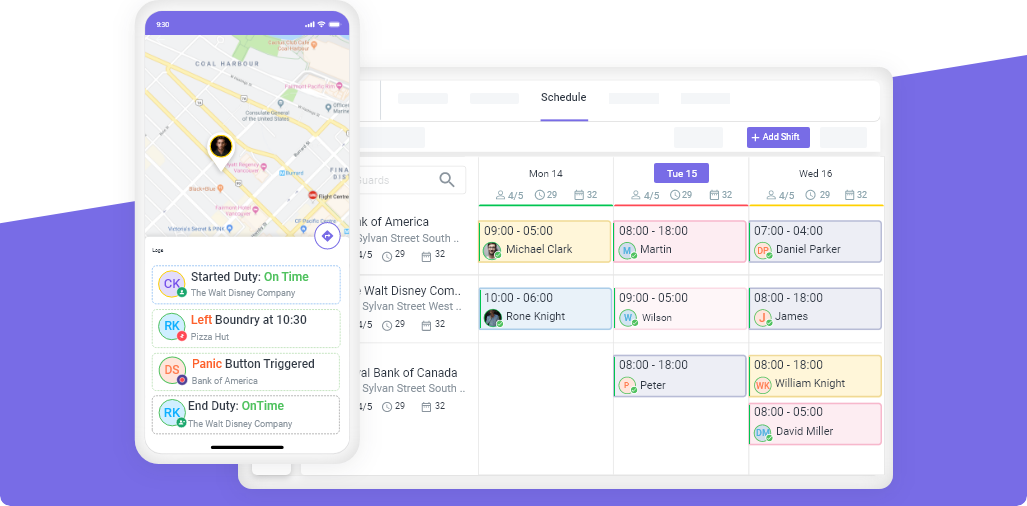
How GPS + Checkpoint Tags Fixed It
Modern mobile patrol uses three layers of verification:
- GPS tracking on every patrol vehicle, every minute of the shift logged with location
- Checkpoint scanning at fixed locations, guard must physically scan an NFC tag at the property to register a visit
- Photo documentation, patrol app requires photos at key checkpoints
Combined, these three layers make falsification extremely difficult. The patrol either really happened or it didn’t, and the audit trail proves which.
Tools
The leading platforms in this space:
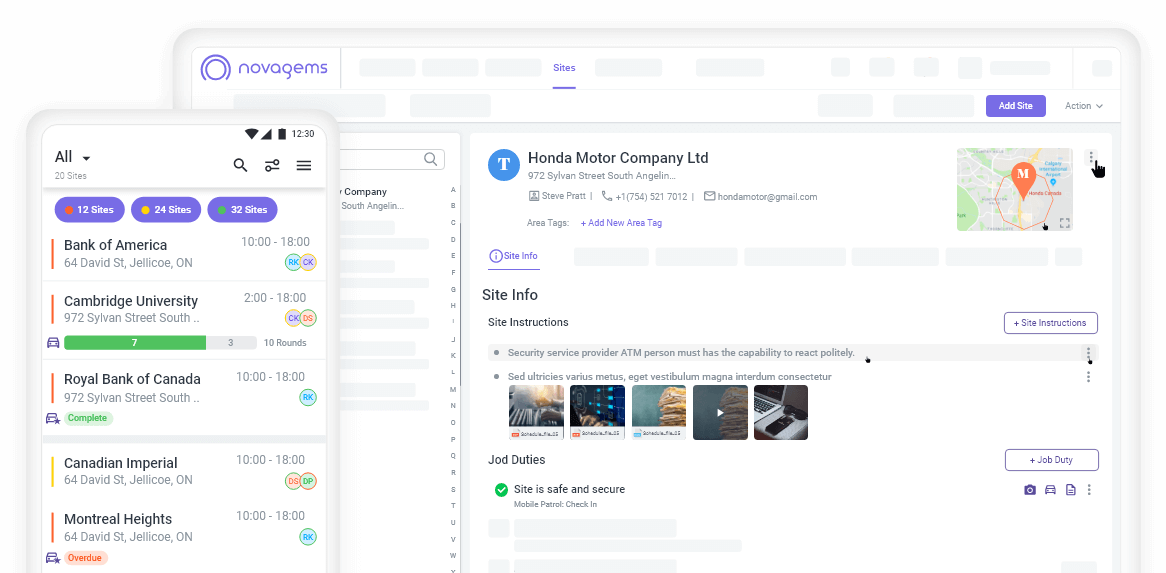
- Novagems, full mobile patrol platform with GPS, checkpoints, dispatch
- GPS tracking and geofencing, core patrol verification
- NFC tags for guard tours, checkpoint scanning
For broader operational technology, see Security Dispatch Software.
What to Demand From Your Vendor
When evaluating mobile patrol vendors, require:
- Live GPS dashboard, you can see patrols happening in real-time
- Audit-ready monthly reports, every visit with timestamp, GPS, checkpoint scans
- Photo evidence, patrol photos at key checkpoints
- Anomaly alerts, system flags missed visits, route deviations, late patrols
- Spot-check capability, random verification of any night’s patrol
If your vendor can’t provide these, switch vendors. Modern technology makes them table stakes.
Alarm Response
Beyond scheduled patrols, mobile patrol companies typically provide alarm response, when an alarm system triggers, the closest available patrol vehicle is dispatched.
How It Works
- Alarm system triggers (intrusion, fire, panic button)
- Central station receives signal
- Central station dispatches mobile patrol (or police, depending on alarm type)
- Mobile patrol arrives at site (typical 15-30 minutes)
- Patrol verifies: false alarm or real incident
- If real, patrol secures, documents, calls police if needed
- Patrol files incident report
Pricing Model
| Component | Cost |
|---|---|
| Per-dispatch alarm response | $50-$150 |
| Emergency call-out (after hours, no contract) | $150-$300 |
| Cancellation (false alarm cancelled before dispatch) | $0-$25 |
| Multi-incident night premium | Negotiated |
False Alarm Reality
Industry data: 80%+ of alarm dispatches are false alarms (wildlife, weather, equipment, user error). This is why mobile patrol companies include alarm response as a service line, false alarms are easier than dispatching police.
Regulatory Framework
State Licensing
Mobile patrol officers must hold the same state security licensing as static guards:
- California — BSIS guard card requirements
- Texas. DPS Level II (unarmed) / III (armed)
- New York. NYS DOS registration
- Florida. FDACS Class D
- Colorado. HB25-1262 (effective Aug 2026, see Colorado guide)
Multi-state mobile patrol companies must maintain proper licensing in every state they operate.
Vehicle and Driver Requirements
- Commercial driver’s license (typically not required for personal-vehicle-class patrol vehicles)
- Commercial auto insurance ($1M+ standard for security work)
- Vehicle inspection records
- Branded vehicles (in most states, security vehicles must be identifiable)
- DOT compliance for any over-weight/over-distance operations
Federal: FCC and Communications
Mobile patrol uses two-way radio. Operators must:
- Maintain FCC business radio license
- Encrypt sensitive transmissions
- Avoid impersonating law enforcement on air
State Workplace Violence Laws
Mobile patrol officers face the same workplace violence laws affecting other security work. California SB 553, NY S6589, and others. Vendors must train officers on de-escalation and crisis response.
How to Evaluate a Mobile Patrol Vendor
Step 1. Define Coverage Requirements
For each property you need patrolled:
- Hours of coverage (overnight only, weekends, etc.)
- Number of visits per shift required
- Specific actions required at each visit (drive-by, walk perimeter, scan checkpoint)
- Alarm response capability
- Reporting requirements
Step 2. Assess Vendor’s Coverage Density
The most critical factor in mobile patrol vendor selection: how many client sites does this vendor already cover in your geographic area?
A vendor with 30+ existing clients in your zip code can offer:
- Faster response times (closer patrols)
- Lower pricing (better route economics)
- More frequent visits at lower marginal cost
A vendor with 2 existing clients in your area is paying for the inefficient route, and passing the cost to you.
Step 3. Verify Technology Stack
| Requirement | Why |
|---|---|
| GPS-verified patrols | Cannot falsify |
| NFC/QR checkpoint scanning | Proves physical visit |
| Photo documentation | Visual evidence |
| Real-time dispatch | Alarm response speed |
| Client portal | Transparency |
| Live dashboard | Real-time verification |
Step 4. RFP Comparison
For 3-5 vendors, request:
- Proposed patrol schedule with timing
- Per-site pricing breakdown
- Alarm response time guarantees
- Sample monthly report
- References from 3 similar properties
- State licensing and insurance documentation
- Coverage area map
Step 5. Pilot Period
Before signing a multi-year contract, run a 60-90 day pilot with explicit performance metrics:
- Patrol completion rate (target >95%)
- Alarm response time (target under 30 min)
- Report quality (timeliness, photo evidence)
- Communication responsiveness
Common Mobile Patrol Mistakes
| # | Mistake | Fix |
|---|---|---|
| 1 | Accepting paper logs | Demand GPS verification |
| 2 | No checkpoint scanning | Require NFC/QR at fixed locations |
| 3 | Vendor with no local route density | Choose vendor with 15+ local clients |
| 4 | Long-term contract before pilot | 60-90 day pilot first |
| 5 | Same time visits every night | Require randomization |
| 6 | Drive-through only when walking is needed | Specify scope in contract |
| 7 | No alarm response time SLA | Contractual response under 30 min |
| 8 | No client portal access | Real-time dashboard requirement |
| 9 | Cheapest vendor wins | Pay 10-15% more for technology + density |
| 10 | No annual review | Quarterly performance review |
Getting Started Checklist
If you’re hiring mobile patrol for the first time:
- Document the threat profile, what are you protecting against?
- Define visit frequency — 2 patrols vs 6 patrols changes pricing 2-3x
- Map out checkpoints, where should the patrol physically scan/photograph?
- List 3-5 vendors, with at least one each from large national, mid-regional, local
- Verify state licensing, current credentials in your state
- Verify insurance — $1M+ general liability, commercial auto
- Site walk, invite top 2-3 vendors to walk the property
- RFP with sample report, see what their reporting actually looks like
- Pilot 60-90 days, performance metrics in writing
- Annual review, pricing, performance, vendor relationship
Wrapping Up
Mobile patrol is one of the most operationally simple but verification-critical security services. The work itself is straightforward, drive a route, check sites, document what you see. The hard part is making sure it actually happens.
GPS tracking, NFC checkpoints, and digital reporting have transformed the industry. Vendors using these tools can deliver verifiable, audit-ready service at competitive prices. Vendors using paper logs and phone check-ins are running 1995 operations in 2026, and you can’t trust the data.
For property managers, HOA boards, and small business owners: ask any vendor you’re evaluating to walk you through their live GPS dashboard. If they can’t or won’t, that tells you everything.
For security companies running mobile patrol: the operational platform you use determines whether you can compete. Novagems provides the GPS-verified patrol management platform that lets mobile patrol companies deliver the technology-backed service modern clients expect. Start a 14-day free trial.
Further Reading
- Types of Security Guard Services: A Complete Guide, pillar
- Residential Security Services. HOAs and gated communities
- Construction Site Security, overnight construction patrol
- School & Campus Security Services, campus mobile patrol
- How to Price Security Guard Contracts, pricing framework
- GPS Tracking and Geofencing, core verification tech
- NFC Tags for Guard Tours, checkpoint scanning
- Security Dispatch Software, modern dispatch
- Workforce Management for Security Companies, operations platform
Sources: Industry mobile patrol pricing data 2025-2026; FCC business radio licensing; state security licensing programs (BSIS, DPS, DOS, FDACS); Colorado HB25-1262.
See Novagems in action
Join 500+ security & cleaning companies that replaced spreadsheets with Novagems.
✓ 14-day free trial · ✓ Free onboarding · ✓ Cancel anytime