Retail security and loss prevention services are specialized security operations protecting retail stores, malls, distribution centers, and e-commerce facilities from shoplifting, organized retail crime (ORC), employee theft, refund fraud, violent incidents, and inventory shrinkage, through a combination of uniformed guards (deterrence), plainclothes loss prevention officers (detection), AI-powered video analytics, exception-based POS reporting, electronic article surveillance, and case investigation. Retail crime hit a new inflection point in 2025: the National Retail Federation’s Impact of Retail Theft & Violence survey reported an 18% YoY increase in shoplifting incidents, a 17% increase in violence during theft events, and 67% of retailers facing transnational ORC groups. This guide covers everything retail operators, LP directors, and security vendors need in 2026: the threat landscape, service categories, NRF data, 2026 pricing, technology stack, regulatory framework, and vendor evaluation.
The numbers from the NRF’s 2025 Impact of Retail Theft & Violence report are stark: retailers experienced a combined 19% increase in shoplifting and merchandise theft incidents from 2024 to 2025, with violence during theft events up 17%, and 70% of retailers reporting growth in ORC-driven phone scams. The 70 retailers surveyed represented $1.3 trillion in 2024 sales, over a quarter of total US retail. ORC groups have gone global: 67% of retailers reported transnational ORC involvement in the past year.
Meanwhile, the industry is in the middle of a massive policy shift: most major retailers (Walmart, Target, CVS, Home Depot) have moved away from physical apprehension toward observe-and-document protocols. Stop-related employee injuries, lawsuits, and tragic outcomes drove the change. The new model: let the merchandise go, document everything, ban the offender, and file a police report.
This guide is for retail operations executives, regional LP directors, single-store owners, mall security managers, and security companies serving retail clients. The goal: a clear-eyed picture of what works, what doesn’t, and what to budget for in 2026.
Retail Security vs Loss Prevention. Are They the Same?
These terms are often used interchangeably but they’re not the same function. Most modern retail security programs use both.
| Function | Retail Security | Loss Prevention |
|---|---|---|
| Primary goal | Customer/staff safety | Shrink reduction |
| Visibility | Uniformed, visible | Plainclothes |
| Approach | Deterrence | Detection |
| Threats addressed | Violence, after-hours, parking | Shoplifting, internal theft, fraud |
| Skills emphasized | De-escalation, presence | Observation, investigation |
| Reports to | Operations or facilities | Loss prevention dept |
| Typical hourly rate | $20-$30 unarmed | $25-$35 |
Best practice: Most retailers use both. Visible security at entrances and parking for deterrence; plainclothes LP roaming the floor for detection.
What Retail Security Services Cover
A comprehensive retail security program addresses multiple distinct threat vectors:
| Function | What It Covers |
|---|---|
| Visible / uniformed security | Customer-facing deterrence, escort services, after-hours coverage |
| Plainclothes loss prevention | Observation, shoplifting detection, ORC pattern recognition |
| Employee theft investigation | Internal theft, sweetheart deals, register manipulation |
| Refund and return fraud | Pattern analysis, suspicious return investigation |
| Exception-based POS reporting | Automated flag of suspicious transactions |
| Electronic Article Surveillance (EAS) | Tag-based theft prevention at exits |
| Video surveillance + AI analytics | 24/7 monitoring with automated alerts |
| Case management and prosecution | Documentation, police coordination, court testimony |
| Cargo and DC security | Inbound/outbound shipment protection |
| E-commerce fraud | Chargeback, account takeover, refund fraud |
The 2025 Retail Crime Landscape
Understanding the threat is the foundation of every other decision. Here’s what NRF data reveals about 2024-2025.
Year-Over-Year Increases (NRF 2025)
| Metric | YoY Change |
|---|---|
| Shoplifting incidents per year | +18% |
| Combined shoplifting + merchandise theft | +19% |
| Violence during theft events | +17% |
ORC Activity (% of retailers reporting increases)
| Crime Type | % Reporting Increase |
|---|---|
| Phone scams | 70% |
| Digital / ecommerce fraud | 55% |
| Shoplifting and merchandise theft | 52% |
| Cargo / supply chain theft | 50% |
| Transnational ORC group involvement | 67% |
Why This Is Happening
Multiple factors converged in 2024-2025:
- Online marketplace resale infrastructure, eBay, Amazon, Facebook Marketplace, OfferUp made stolen goods easy to monetize
- INFORM Consumers Act (2023) helped but is incompletely enforced
- Reduced prosecution thresholds in some states (CA Prop 47, others) reduced felony deterrence
- Organized crime adaptability, shifted to e-commerce fraud as physical theft hardened
- Inflation pressure, economic stress correlates with theft uptick
- Reduced retail staffing, fewer eyes on the floor due to labor shortages
Top ORC Targets
| Category | Why Targeted |
|---|---|
| Cosmetics | High value, small size, easy resale |
| Electronics | Universal demand, online marketplaces |
| Baby formula | Recurring demand, hard to track |
| OTC medication (Tide, Tylenol, allergy meds) | Mass demand, minimal scrutiny |
| Designer clothing | High markup |
| Power tools | Hard to ID, contractor demand |
| Liquor (high-end) | Easy to resell at events |
| Razors and personal care | Small, pricey, frequently restocked |
Service Categories Within Retail Security
Department Stores and Anchor Stores
Setup: Multiple uniformed security at entrances + plainclothes LP roaming + back-of-house investigation team.
Cost: $200K-$500K+ annually.
Big-Box (Walmart, Target, Costco, Home Depot)
Setup: Regional LP teams covering 10-30 stores + per-store visible coverage during peak + AI video monitoring.
Cost: Per-store cost $50K-$150K plus regional infrastructure.
Mall / Lifestyle Center
Setup: Mall-wide patrol team + parking lot coverage + retailer-specific LP within stores.
Cost: Mall security $500K-$2M annually shared across tenants.
Specialty Retail (Jewelry, Cannabis, Electronics)
Setup: Higher-skilled, sometimes armed security + EAS + extensive video + dual-staff protocols.
Cost: $80K-$300K per store.
Convenience Store / Gas Station
Setup: Often single overnight clerk with bulletproof window + cameras + remote monitoring; some chains add overnight guards.
Cost: Varies; clerk-based < $20K; guard-based $50K-$150K per location.
E-Commerce Fulfillment
Setup: Mainly internal theft prevention, strict access control, randomized package audits, no-bag policies in pick zones.
Cost: $200K-$1M+ depending on facility size. See our Warehouse Security guide.
Retail Security Pricing in 2026
Hourly Rates
| Service Level | Hourly Rate |
|---|---|
| Standard unarmed retail guard | $20-$30 |
| Plainclothes loss prevention officer | $25-$35 |
| Armed retail (specialty/high-risk) | $30-$45 |
| LP investigator | $30-$50 |
| Holiday / peak surge premium | +20-40% |
Annual Cost by Retail Type
| Retail Type | Annual Spend |
|---|---|
| Single specialty store | $20,000-$60,000 |
| Mid-size store (10K-30K sq ft) | $40,000-$120,000 |
| Department store / anchor | $200,000-$500,000 |
| Mall / lifestyle center | $500,000-$2,000,000 |
| Big-box single store | $50,000-$150,000 |
| Big-box chain (per region) | $2,000,000-$10,000,000 |
| National chain LP infrastructure | $20,000,000-$200,000,000+ |
Hidden Cost Factors
| Factor | Impact |
|---|---|
| Holiday surge (Nov-Dec) | +30-50% staffing premium |
| Black Friday / major events | Specific event coverage |
| ORC-targeted store designation | +25-40% over standard |
| State / local prosecution friction | Higher LP investment needed in low-prosecution areas |
Technology Stack for Modern Retail Security
The “cameras and tags” approach of 2010 doesn’t work in 2026. Here’s the modern stack.
AI Video Analytics
Replaces “guard watching monitor” with automated detection:
- Theft behavior (concealment, tag manipulation)
- Weapon detection
- Loitering at high-shrink areas
- Suspicious return patterns
- Tailgating into stockrooms
Facial Recognition for Repeat Offenders
Where legally permitted (most states with proper signage), facial recognition flags banned individuals on entry. Major chains have used this for 5+ years.
Exception-Based POS Reporting
Automated analysis of POS transactions flags:
- Excessive voids/refunds by employee
- Discount abuse patterns
- Suspicious refund timing
- Sweetheart-deal patterns
RFID Inventory Tracking
Real-time inventory visibility prevents:
- Sweetheart-deal manipulation
- Employee shrinkage
- Out-of-stock scenarios that drive customers elsewhere
Electronic Article Surveillance (EAS)
Hard tags, soft labels, and exit pedestals, still effective for everyday theft prevention. Modern systems integrate with video for instant review when triggered.
Mobile Incident Reporting
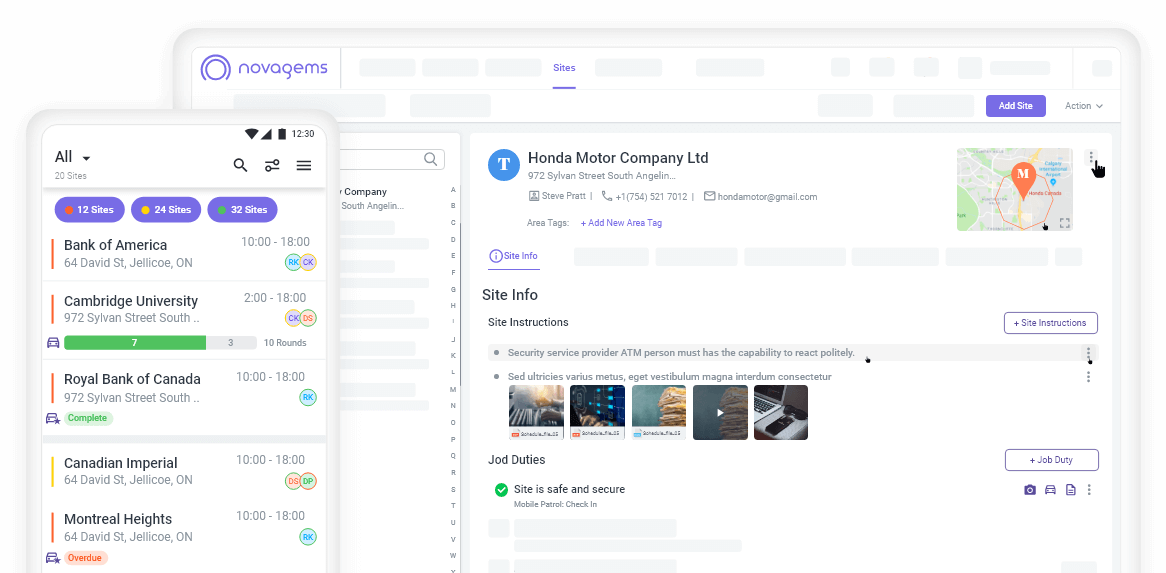
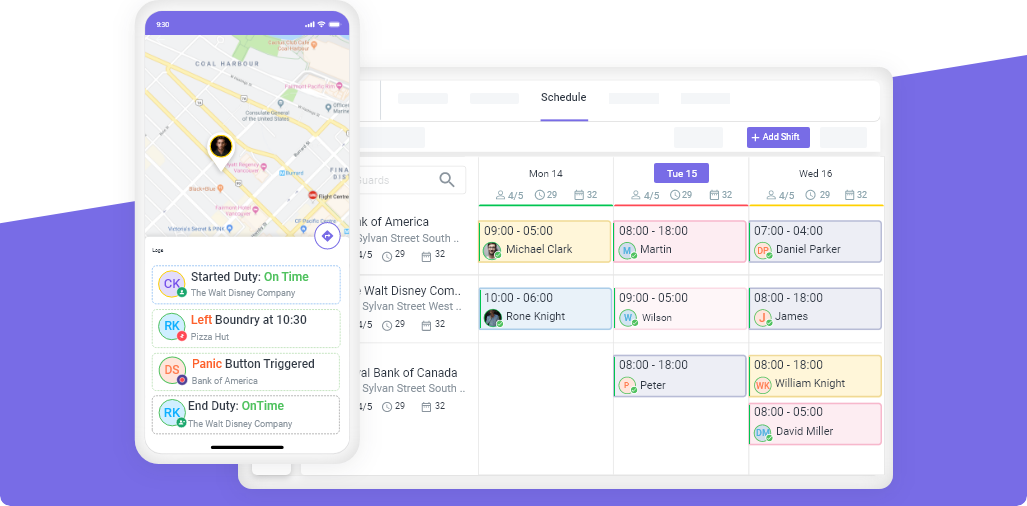
Modern retail security uses platforms like Novagems so guards file incident reports from phones with photo, video, GPS, and timestamp. See GPS tracking and geofencing.
Case Management Systems
Aggregates incidents across stores to spot ORC patterns: same individuals/vehicles hitting multiple locations, same merchandise targets, same timing patterns.
Regulatory Framework for Retail Security
Federal: INFORM Consumers Act (2023)
Federal law requires online marketplaces to verify high-volume third-party sellers (those with more than $5,000 in gross sales or 200 transactions). Has reduced (not eliminated) ORC resale through major platforms.
State Workplace Violence Laws
Increasingly affecting retail:
- California SB 553 (effective 2024), workplace violence prevention plans required for most employers including retail
- New York retail worker safety legislation, emerging
- Washington, Maryland, Texas, various worker safety laws applicable to retail
State Privacy Laws on Facial Recognition
Variable patchwork:
- Illinois BIPA, strict consent requirements for biometric data
- California CCPA, disclosure and opt-out rights
- Texas, Washington, various biometric privacy laws
- Most states, facial recognition allowed with notice signage
State Licensing for Personnel
Standard state licensing applies to retail security:
- California. BSIS guard card
- Texas. DPS Level II/III/IV
- New York. NYS DOS registration
- Florida. FDACS Class D / Class G
- Colorado. HB25-1262 (effective Aug 2026, see our Colorado guide)
Municipal Retail Crime Task Forces
Major metros (NYC, LA, SF, Chicago, Atlanta) have task forces dedicated to ORC prosecution. Retailers feed evidence to these task forces for coordinated cases.
The Apprehension Policy Shift
The single biggest operational change in retail security 2022-2026: the move away from physical apprehension.
Old Model
- Plainclothes LP observes shoplifting
- Stops suspect outside store (“Six Steps to Apprehension”)
- Recovers merchandise
- Detains for police
- Files charges
New Model (most major chains)
- Observe and document
- Do not physically intervene
- Allow theft to occur
- Document with video, witness statement, suspect description
- File police report
- Issue trespass / banning notice
- Use ORC database for repeat offenders
Why the Shift
- Violence during stops surged — 17% YoY increase
- Employee injuries and lawsuits, multi-million-dollar settlements
- Tragic outcomes, high-profile incidents (employee killed, suspect killed)
- Insurance pressure, merchandise loss insurance is cheaper than litigation
- Workforce retention, employees won’t stay if they fear physical altercation
Operational Implications
- LP officers need different skills (observation, documentation, ORC pattern recognition), not “stops”
- Training emphasizes de-escalation, not apprehension techniques
- Camera and AI investment becomes more important (less reliance on physical interception)
- Police response and prosecution become critical (since on-scene action is restricted)
Some retailers have moved partially back toward apprehension at specific high-shrink stores or for repeat offenders. The pendulum is settling somewhere between full apprehension and full disengagement.
How to Hire a Retail Security Vendor
Step 1. Assess Threat Profile by Store
Don’t apply uniform coverage. Tier stores by:
- ORC targeting (high-shrink, on-task-force radar)
- Local prosecution rate
- Demographics and traffic
- Historical incidents
- Hours of operation
- Merchandise profile
Step 2. Define Coverage Strategy
Decide:
- Visible security only?
- Plainclothes LP only?
- Both?
- Hours of coverage by store tier
- Holiday surge plan
- Investigation/case management
Step 3. RFP to Qualified Vendors
Retail-specific must-haves:
| Requirement | Why |
|---|---|
| Retail-sector references (3+ chains) | Sector-specific expertise |
| LP officer training program documented | Apprehension policy alignment |
| State licensing in all operating states | Legal requirement |
| Insurance — $2M+ liability + LP-specific coverage | Stop-related risk |
| Integration with POS exception reporting | Data-driven LP |
| AI video integration capability | Modern surveillance |
| Surge staffing capability (holiday) | Operational flexibility |
| Investigation and case management | Prosecution support |
Step 4. Evaluate Beyond Price
| Criterion | Weight |
|---|---|
| Retail-sector experience | 25% |
| Apprehension policy alignment | 20% |
| Technology stack and integration | 20% |
| Surge capability and flexibility | 15% |
| Training programs | 10% |
| Pricing transparency | 10% |
Step 5. Pilot at 1-3 Stores
90-day pilot with metrics:
- Apprehension/observation rates aligned with corporate policy
- Incident documentation quality
- Integration with corporate LP team
- Officer retention (turnover signals issues)
- Total cost predictability
Common Retail Security Mistakes
| # | Mistake | Fix |
|---|---|---|
| 1 | Uniform coverage across all stores | Tier by threat profile |
| 2 | Vendor not aligned with apprehension policy | Document policy in contract |
| 3 | No integration with POS exception reporting | Data-driven LP |
| 4 | No AI video analytics | Add, catches 60-80% more |
| 5 | No ORC database participation | Join regional/national task forces |
| 6 | Holiday under-staffing | Plan surge 6 months ahead |
| 7 | Refund fraud not investigated | Pattern analysis is high-ROI |
| 8 | Ignore internal theft (often 30% of shrink) | Random audits + exception reporting |
| 9 | Generic vendor without retail experience | Demand 3+ chain references |
| 10 | No annual security review | Quarterly with regional LP |
Getting Started Checklist
For a new retail operations or LP director:
- Inventory all stores, addresses, formats, hours, current coverage
- Risk-tier each store, high (ORC target, on task force radar), medium, low
- Audit current vendor performance, what’s working, what’s not
- Review last 12 months of shrink data, by store, by category, by employee
- Verify state licensing, every guard at every store
- Apprehension policy review, is policy current and trained?
- Technology gap assessment. POS exception, AI video, EAS, RFID
- Holiday surge plan. November-December is 30%+ of theft
- ORC task force participation, regional or national task forces
- Annual third-party security audit, independent perspective
Wrapping Up
Retail security in 2026 is in transition. The threat landscape has gotten worse (NRF data shows 18-19% YoY increases in shoplifting and theft), the operational model is shifting (away from physical apprehension), and the technology stack is evolving fast (AI video, RFID, exception-based POS).
The retailers winning at security 2026 share three patterns: they tier coverage by store-level threat (not uniform deployment), they invest heavily in technology (AI video catches 60-80% more than guards alone), and they treat security as both shrink-reduction and workforce-retention strategy.
For security companies serving retail: the margins are real but the operational complexity has increased. Retail clients now want apprehension-policy alignment, technology integration, and ORC pattern recognition, not just guards on the floor.
For retail operators: ask your vendor to walk through their last 6 months of incident reports across your stores. If they can’t show pattern analysis, technology integration, and clear policy alignment, you have a vendor gap.
Novagems provides the workforce management platform retail security companies use to deliver verifiable, audit-ready operations across multi-store retail clients. Start a 14-day free trial.
Further Reading
- Types of Security Guard Services: A Complete Guide, pillar
- Bank Security Services, adjacent regulated vertical
- Warehouse Security Services. DC/fulfillment for e-commerce retail
- Hospital Security Services, workplace violence parallel
- How to Price Security Guard Contracts, pricing framework
- AI in the Security Guard Industry (2026). AI video analytics
- GPS Tracking and Geofencing, patrol verification
- Workforce Management for Security Companies, operations platform
Sources: NRF Impact of Retail Theft & Violence 2025 report; NRF Organized Retail Crime statistics; INFORM Consumers Act federal documentation; California SB 553; Pinkerton Retail Risk Management research.
See Novagems in action
Join 500+ security & cleaning companies that replaced spreadsheets with Novagems.
✓ 14-day free trial · ✓ Free onboarding · ✓ Cancel anytime