Security guard checkpoint tours are one of the simplest ways to prove that a site was actually patrolled. Instead of trusting a paper logbook or a guard’s word, a checkpoint tour creates a time-stamped, location-stamped record every time a guard reaches a point on their route. This guide explains what checkpoint tours are, how patrol verification works, and how to set up a system that holds up when a client asks for proof.
What is a checkpoint tour?
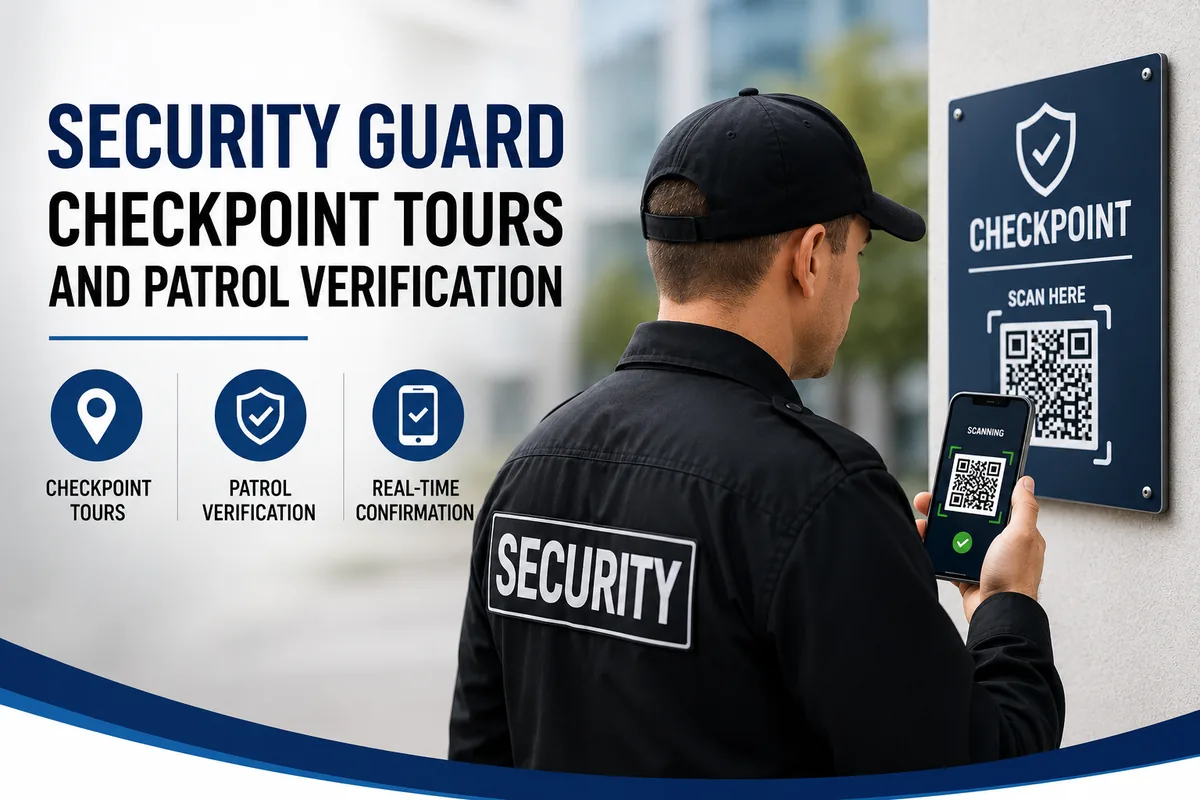
A checkpoint tour, sometimes called a guard tour, is a defined route of physical points a guard is expected to visit during a shift. Each point is a “checkpoint,” and the guard confirms they reached it by scanning or tapping it with their phone. The result is a clear record of where the guard went and when.
Checkpoints are usually placed at the locations that matter most for a site: entrances and exits, stairwells, loading docks, server rooms, perimeter fences, and any area a client specifically wants monitored.
What is patrol verification and why does it matter?
Patrol verification is the process of confirming that a patrol happened the way it was supposed to. Without it, a security company is relying on trust. With it, every patrol produces evidence.
This matters for three reasons:
- Accountability. Guards know each checkpoint is recorded, which reduces skipped rounds and time theft.
- Client trust. When a client asks whether their site was covered overnight, you can show them exactly which points were scanned and when.
- Liability. If an incident happens, a verified patrol history shows what was and was not covered, which protects both the guard and the company.
How checkpoint verification works
Modern checkpoint verification runs on the guard’s phone. There are three common methods, and most sites use a combination:
- QR codes. A printed code is placed at each checkpoint. The guard scans it with their camera. QR codes are cheap and easy to deploy across many sites.
- NFC tags. A small tag is fixed at the checkpoint. The guard taps it with their phone. NFC works well indoors and in low light where a camera scan is harder.
- GPS geofences. The system confirms the guard was physically inside a defined area. This works for large outdoor sites where placing tags is impractical.
Every scan captures the time and the location. If a checkpoint is missed, late, or scanned from the wrong place, the system can flag it immediately.
How to set up an effective checkpoint tour system
- Map the site with the client. Walk the property and agree on which points must be covered and how often.
- Place checkpoints at those points. Choose QR, NFC, or GPS based on the environment of each location.
- Build the route and schedule. Define the order and frequency of the tour so guards know exactly what is expected.
- Set alerts for exceptions. Decide what should trigger a notification, such as a missed checkpoint or a late scan, so managers can act during the shift.
- Review and report. Use completed tour data to confirm coverage, coach guards, and send proof to the client.
Common problems checkpoint verification solves
- Guards skipping rounds on quiet shifts
- Disputes over whether a patrol actually happened
- Managers spending hours assembling reports by hand
- Clients asking for proof of coverage that no one can produce
- Missed patrols only being noticed after an incident
How Novagems handles checkpoint tours
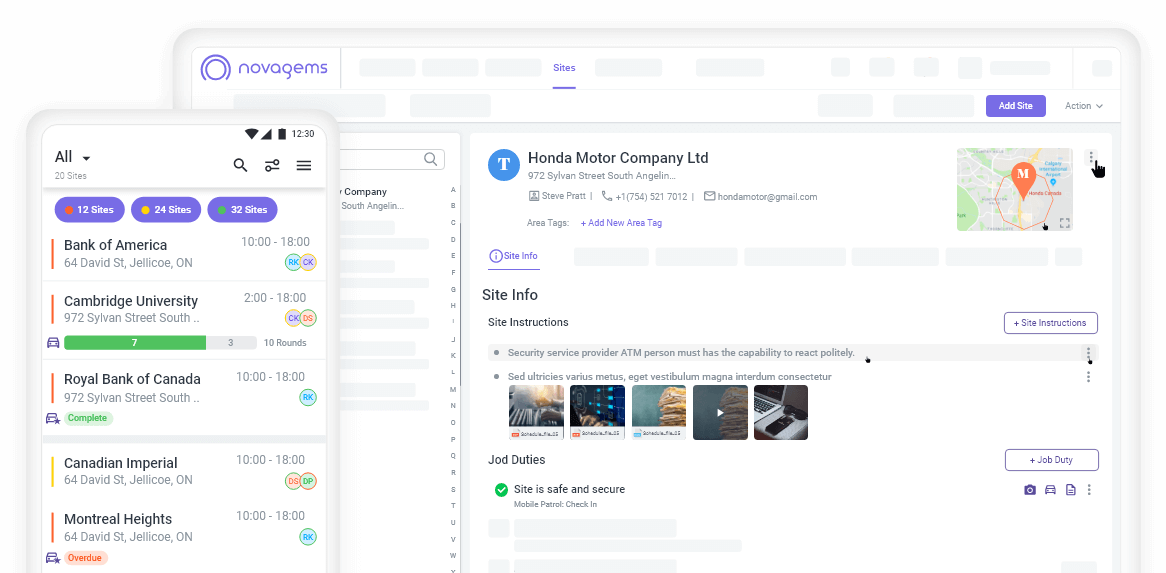
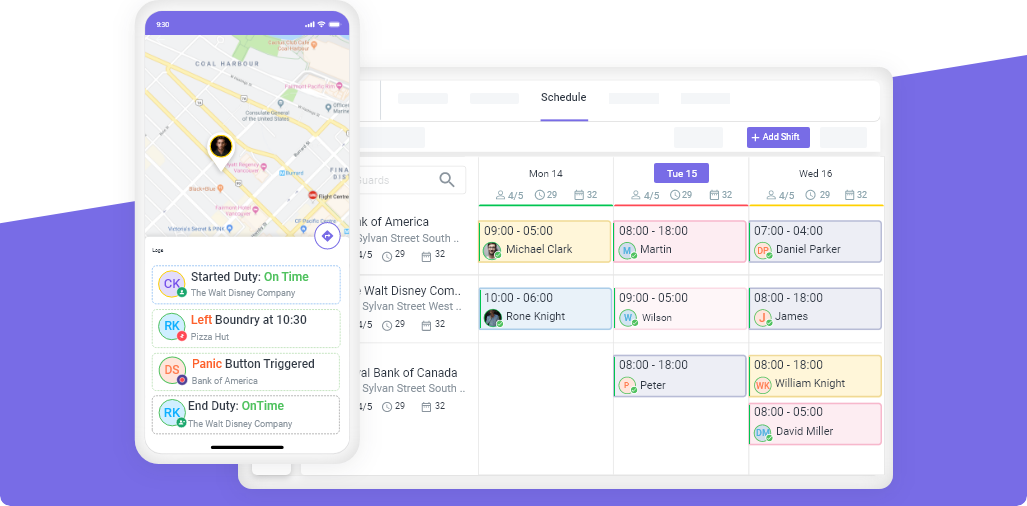
Novagems includes checkpoint tours as part of its security guard management platform. Guards scan QR or NFC checkpoints, or check in through GPS geofences, directly from the Novagems mobile app on Android or iOS. Managers see completed, missed, and late checkpoints in real time on one dashboard, and completed tours can be turned into client-ready reports without manual assembly.
Because checkpoint tours sit alongside scheduling, incident reporting, and payroll-ready timesheets in the same platform, a manager can plan the shift, watch it happen, and prove coverage from a single screen.
Frequently asked questions
What is a checkpoint tour in security? A checkpoint tour is a defined route of physical points a guard must visit and scan during a shift. Each scan is time-stamped and location-stamped, creating a verifiable record that the guard covered the site.
How do guards verify a patrol? Guards scan a checkpoint with their phone using a QR code, an NFC tag, or a GPS geofence. The scan records the exact time and location so managers can confirm the patrol happened.
Can checkpoint tour reports be shared with clients? Yes. Completed tours, timestamps, and incidents can be compiled into a report and sent to the client as proof of coverage.
See Novagems in action
Join 500+ security & cleaning companies that replaced spreadsheets with Novagems.
✓ 14-day free trial · ✓ Free onboarding · ✓ Cancel anytime