The guard who just gave notice wasn’t the flaky one. It was the reliable one.
You know the officer. Always covered the post. Knew the client by name. Never needed chasing at 11 p.m. to confirm a shift. And now they’re leaving, probably for a company paying barely more than you do.
That’s the quiet crisis in contract security: the good guards leave, and they almost never leave over a single bad shift. They leave because of a short, predictable list of frustrations that pile up week after week. The good news is that almost none of them require a huge raise to fix.
The numbers are brutal, and they’re getting worse
Security has one of the worst turnover problems of any industry. Reporting puts annual guard turnover between 100% and 300% at many firms, and the sector averaged about 77% in 2024, up from 69.3% before the pandemic and roughly a third higher than the private-sector average (ASIS International). More than 40% of security providers now name turnover as their single biggest challenge.
Translation: most companies are rehiring and retraining their entire guard force every year. That is enormous money lost to recruiting, onboarding, and uncovered posts, and it is almost entirely preventable.
Why your best guards actually leave
1. The schedule is chaos
Unpredictable shifts, last-minute changes, and the 5 a.m. “can you cover?” text are the fastest way to lose a good guard. People cannot build a life around a schedule that changes constantly. Irregular shifts and excessive overtime are consistently among the top reasons guards walk.
The fix: publish schedules early, keep them stable, and stop running coverage off a group chat.
2. They feel invisible
Ask a guard who’s quitting and you’ll often hear the same thing: “I only ever heard from the office when something went wrong.” Your best officers build client relationships and solve problems on-site that you never see. When that work goes unrecognized, the message they receive is that nobody is paying attention.
The fix: notice the good work, not just the mistakes. A specific thank-you costs nothing and retains more than you’d think.
3. Shifts aren’t shared fairly
When rostering is manual, hours get handed out by habit or favoritism. Some guards get starved of income while others burn out on forced overtime. Both groups quit. Reliable part-timers leave because they can’t count on the hours; full-timers leave because they’re exhausted.
The fix: distribute shifts transparently, and broadcast open shifts to every eligible, available guard instead of the same few names.
4. The pay doesn’t add up, literally
Wages matter, and security pay has barely moved. A 2025 analysis found the median guard in 2022 earned about two cents less per hour, adjusted for inflation, than in 2003, while rent rose more than 14% over a similar period (Center for American Progress). But there’s a second, fixable problem: late or wrong paychecks. When hours are tracked on paper and payroll is a guess, guards get shorted, and nothing pushes a good employee out the door faster than fighting for their own money.
The fix: you may not win every wage war, but you can always pay accurately and on time.
5. There’s nowhere to go
A dead-end job pushes good people out. Companies with the best retention consistently point to advancement opportunities, incentives, and training as what keeps officers around. If your best guard can’t see a path to lead guard, site supervisor, or trainer, they’ll find a path somewhere else.
The fix: build a visible ladder and tell guards how to climb it.
6. They feel alone on post
Long overnight shifts, isolated sites, and being the first to face whatever happens take a toll. A guard who feels unsupported and unsafe is a guard already drafting a resignation.
The fix: regular check-ins, working lone-worker safety tools, and a manager who actually answers the phone.
How to keep the guards you can’t afford to lose
Notice the pattern: most of what drives good guards out is operational, not financial. Fix the day-to-day and you keep people even when you can’t outbid a competitor on wages.
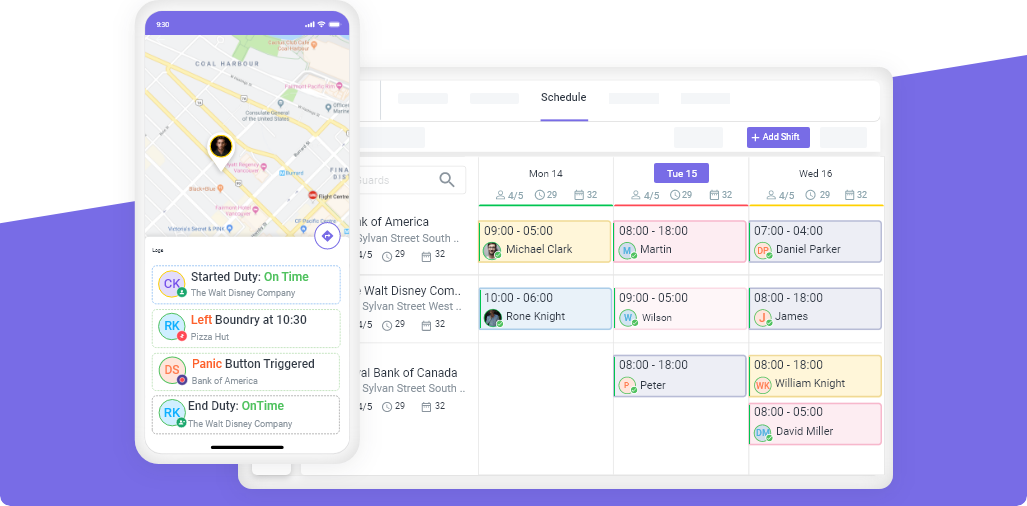
- Make schedules predictable and fair. Build conflict-free schedules in advance and share open shifts with every qualified guard. See how purpose-built guard scheduling and open-shift broadcasting remove the favoritism and the 5 a.m. scramble.
- Pay accurately and on time. GPS-verified clock-in turns real hours into payroll-ready timesheets, so paychecks are right the first time.
- Make good work visible. When you can see who reliably shows up, completes patrols, and files clean reports, you can recognize it instead of taking it for granted.
- Offer a path. Train guards and promote from within so your best people grow with you.
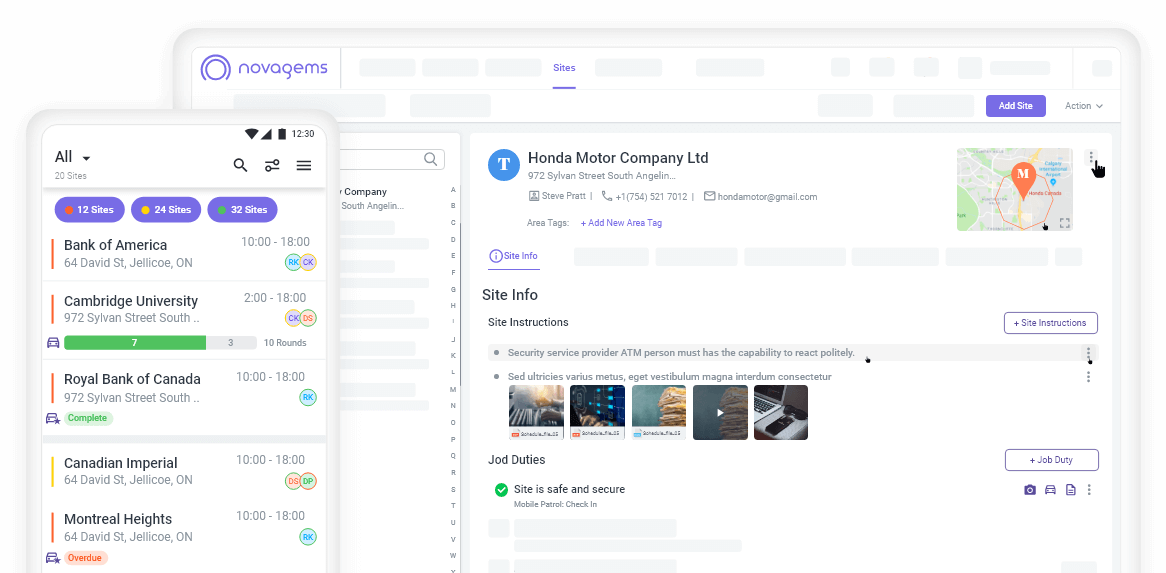
This is exactly the gap a single platform closes. Novagems gives security companies one app for scheduling, GPS-verified attendance, checkpoint tours, and reporting, so the daily chaos that drives good guards away simply goes away. For the full retention playbook, see our deep dive on what causes security guard turnover and how to fix it.
The bottom line
Your best guards aren’t leaving because they’re disloyal. They’re leaving because the job, as they experience it day to day, is harder and more chaotic than it needs to be. Stable schedules, fair shifts, accurate pay, and a little recognition keep the people who keep your contracts.
Want to stop losing your good guards? See how security guard management software fixes the operations behind turnover, free for 14 days.
See Novagems in action
Join 500+ security & cleaning companies that replaced spreadsheets with Novagems.
✓ 14-day free trial · ✓ Free onboarding · ✓ Cancel anytime