Securing security contracts with local government agencies can revolutionize your security guard business. These contracts provide stability, long-term revenue, and the credibility that comes with serving your community. But breaking into the world of government contracting isn’t as easy as just submitting a quick proposal. It takes preparation, strategy, and insight into what makes government agencies tick.
From finding them to creating the winning proposal that will set yours apart from the competition. I am going to walk you through everything you need to know to land those valuable local government security bids.
Key Takeaways
- Local government contracts provide a steady income. Unlike private contracts, which may appear and disappear, government security contracts usually run for several years.
- You cannot just wake up one morning and start bidding on security guard government contracts. You will need to have certain licenses, insurance coverages, and documentation available even before submitting a proposal in the first place.
- There are multiple platforms on which one can find opportunities-from SAM.gov for federal contracts to state-specific portals. Knowing where to look for local government security bids is half the battle.
- Your proposal matters more than you think. Government agencies evaluate proposals based on specific criteria: technical capability, past performance, and price. A well-structured response that addresses these factors directly will dramatically enhance your chances.
- Security companies using modern tools-like GPS tracking, digital reporting, and scheduling software-tend to always rate highly on technical evaluations. Because they show a good understanding of operational efficiency.
What to Know Before Bidding on Security Contracts
Jumping into government contracting without proper preparation is the equivalent of showing up to a job interview in your PJs: you might get in the room, but you’re not getting hired. What to have in place before starting to chase those security contracts:
Licensing and Certification are not compromised
Compliance matters at the local level, too. Each state has its own set of various requirements for security guard companies, all of which you will have to meet. This generally includes a valid business license, a security company license, and individual guard certifications for your staff. Smaller municipalities may require other certifications depending on facility type-schools may require additional background checks beyond what is minimally required, while courthouse security may require training specifically tailored to that environment.
Don’t wait until the perfect opportunity arises. Get your paperwork in order. Research what your state requires now so that everything can be current and readily accessible when it is time to bid.
Insurance coverage must be strong
Government contracts often involve higher insurance requirements compared to many private jobs. You typically need at least $1 million to $2 million in general liability insurance, workers’ compensation coverage, and perhaps professional liability coverage. Some contracts require armed security service coverage for additional weapon-related mishaps.
Review your current insurance policies and engage an insurance agent with government-contracting experience to ensure you meet, or exceed, typical requirements. One of the quickest ways to get your bid rejected without anyone reading your proposal is to have inadequate coverage.
Financial stability matters
What agencies really want to know is that you can handle the contract financially: have your books clean, good credit, and enough working capital to handle any possible delays in payment. Government payment cycles can be longer than many private sector clients, too- sometimes 30 to 60 days or more.
Be ready to submit financial statements, tax returns, and even bank references to bid on many projects. If your company is new or has experienced some financial setbacks, bide your time and begin with smaller contracts while you build your track record.
Past Performance - Your Best Friend in Documentation
Government contracting evaluators love proof of past success. You should start building this documentation now, even if you’ve only worked with private clients so far. Collect letters of recommendation, performance reviews, incident reports showing successful responses, and any metrics that demonstrate your reliability.
If you’re entirely new to security contracts, think about partnering with a more established company as a subcontractor on government projects to establish experience and build references.
Understanding the Level of Commitment
Government security contracts are not informal agreements. You will be required to have the same staffing continually, provide extensive reports on a regular basis, and be prepared for intermittent audits or inspections. Be sure your company has the operational capability to deliver what you promise, day in and day out, for the entire contract term.
How to Win Security Contracts: Tips for Security Companies
Now that you’re prepared, let’s talk about strategy. Winning-how to win security contracts requires more than simple qualification. A strategic and deliberate approach is needed.
Agency Research - Before Bidding
Not all government security contracts are the same. A school district has different priorities than a municipal courthouse or public transit authority. Do your homework on the specific agency before responding to any proposal. What are their current challenges? Have they had security incidents recently? What did their previous contractor struggle with?
This research helps you tailor your proposal to address their actual concerns rather than generic security talking points. Government evaluators can tell the difference between a customized solution and a template proposal, and they appreciate vendors who took the time to understand their unique situation.
Price Competitively, But Don’t Race to the Bottom
Yes, price matters in government contracting. But the notion that the lowest bid wins simply is not true. Most government security contracts are assessed based upon technical approach, along with past performance and cost. Being the cheapest option does nothing if your technical proposal is weak.
Price your services fairly based on the actual cost of delivering quality service. Include all expenses-wages that meet or exceed local minimums, training, equipment, insurance, and a reasonable profit margin. Then make your technical proposal strong enough to justify your pricing.
Highlight Technology and Innovation
This is where modern security companies can hold a decided advantage. Government agencies are increasingly interested in contractors who deploy technology in a way that improves service delivery and accountability. If your company deploys GPS tracking to verify guard locations, mobile apps for real-time reporting, or scheduling software to ensure proper coverage, make this a centerpiece of your proposal.
These are not just impressive-sounding tools but solve actual challenges that government clients face. They provide the documentation and accountability that agencies need by reducing administrative burden. A security company able to provide detailed digital reports and real-time updates often proves more valuable than one relying on paper logbooks and phone calls.
Build Partnerships for Larger Contracts
Some government security contracts are too large for smaller companies to handle alone. Do not let this discourage you. Consider forming partnerships or joint ventures with other security firms. Many RFPs encourage or require small businesses to participate, and larger companies often need smaller partners to meet these requirements.
Partnerships can also give you access to contracts in locations where you don’t have an established presence or bring specialized capabilities that you may not possess in-house.
Start Small and Build Your Track Record
If you are new to government contracting, do not immediately chase the biggest, most lucrative contracts. Start with smaller opportunities-perhaps a single facility or part-time coverage. Completion of smaller contracts builds the past performance record necessary to compete for bigger ones.
Government agencies trust vendors with proven track records, and a history of successful contracts, even small ones, carries significant weight in the evaluation process.
Attend Pre-Bid Meetings
Pre-bid meetings or conferences are given quite often when government agencies issue RFPs for security guard government contracts. When at all possible, it is best to attend these. They give you a chance to ask questions for clarification, view the facility, meet the decision-makers, and sometimes even scope out your competition.
These meetings also reflect your genuine interest in the contract. Agencies remember who showed up and asked intelligent questions.
Where to find Government Security Contracts
You can’t bid on opportunities you don’t know about. Finding government security contracts requires knowing where to look and checking these sources regularly.
SAM.gov: The Federal Starting Point
SAM.gov is the official U.S. government system for posting federal contract opportunities. Though this guide focuses on local government contracts, many federal agencies have facilities in local communities, and federal contracts can be excellent opportunities for security companies.
You’ll need to register your business in SAM.gov to bid on federal contracts. While registration is free, it requires detailed business information. Once registered, you can search for security-related opportunities by keyword, location, or agency.
State and Local Government Portals
Most states, and many larger cities and counties, maintain their own procurement portals where they post their RFPs and bid opportunities. These vary by location, but examples include state purchasing divisions, county procurement offices, and municipal contracting websites.
Search “[your state] procurement opportunities” or “[your city] bid opportunities” to find the portal that applies. Bookmark and regularly visit these sites. Many will allow you to set up e-mail alerts as new opportunities become available in specific categories.
BidNet Direct and other similar services
Commercial services such as BidNet Direct, GovWin IQ, and FindRFP assemble government contracting opportunities from various sources into searchable databases. These services charge subscription fees but can save considerable time since they aggregate opportunities from multiple jurisdictions in one location.
Many will offer free trial periods, which allow you to get a sense of whether the service will provide enough relevant opportunities to make it worth the cost.
Direct Relationships with the Local Agencies
Don’t underestimate the power of direct outreach. Identify area government facilities likely to require security services. Schools, courthouses, public transportation systems, parks and recreation facilities, and municipal buildings. And introduce your company to their procurement or facilities management departments.
Although they will be unable to tell you about bids in advance, building these relationships helps ensure that you are on their radar if and when an opportunity does come around. Some agencies keep a list of vendors and personally invite qualified companies to bid on contracts related to products or services.
Network with Other Contractors
Sometimes, security companies pick up opportunities through industry networks. Join local business associations, chambers of commerce, and security industry groups. Other contractors, particularly those in complementary services, might share information about upcoming opportunities or even partner with you on larger bids.
RFP Response Checklist for Security Companies
When you find a promising opportunity, go through this checklist to make sure your proposal response hits on all the key elements:
Before You Write
- Read the whole RFP document at least twice.
- Note all submission requirements: format, page limits, number of copies, and deadline.
- Identify all the evaluation criteria and their relative importance
- Attend any pre-bid meeting offered
- Prepare questions for the agency in case anything is not clear
- Assess whether you can realistically deliver what is required.
Executive Summary
- Address the stated needs of the agency directly.
- Highlight your key qualifications in 1-2 paragraphs.
- Explain why your company is the right choice
- Limit it to a single page maximum.
Company Qualifications
- Provide company history and background
- License/Certification relevant to the industry
- List key personnel and their qualifications
- Highlight experience with similar contracts or facilities.
- Include any awards or recognition received
Overview of Technical Approach
- Describe precisely how you will deliver the services needed.
- Explain your staffing plan - how many guards, when, where
- Describe your training programs and procedures
- Describe your technology and equipment.
- Outline communication and reporting processes
- Describe how you’ll handle emergencies or special situations
- Address each technical requirement specifically from the RFP.
Past Performance
- Provide 3-5 relevant client references
- Include the value of the contract, duration, and description for each
- Performance metrics or achievements will be highlighted.
- Attach letters of recommendation, if available.
- Describe how past experience applies to this opportunity.
Price
- Provide a clear, detailed pricing breakdown.
- Ensure that all required cost elements are included.
- Verify your pricing meets any stated requirements
- Explain what’s included and any possible additional costs.
- Verify that pricing is competitive yet sustainable
Required Forms and Certifications
- Fill out all forms in the required manner EXACTLY.
- Provide all required certifications and documents
- Include proof of insurance with required levels of coverage
- Verify all signatures are included where required
Final Review
- Verify that you have responded to each and every requirement in the RFP
- Proofread for errors—typos suggest carelessness
- Verify formatting meets all specifications
- Ensure the document is organized and easy to navigate.
- Meet the deadline well in advance
Serving your clients like a pro
But winning the contract is just the beginning. Great service means renewals, references, and a good reputation, all those things that help you win more security contracts down the line.
Exceed Reporting Requirements
Government contracts often involve recurring reporting—incident reports, attendance lists, activity summaries. Just meeting these requirements isn’t enough; exceed them. Supply reports that are transparent, thorough, and timely. Take advantage of the various technologies to make reporting easier and more comprehensive.
Digital reporting systems that provide real-time updates and detailed documentation impress government clients and ease their administrative work. Such a level of service will be remembered and stand out when the time for contract renewal is near.
Leverage the Right Tools
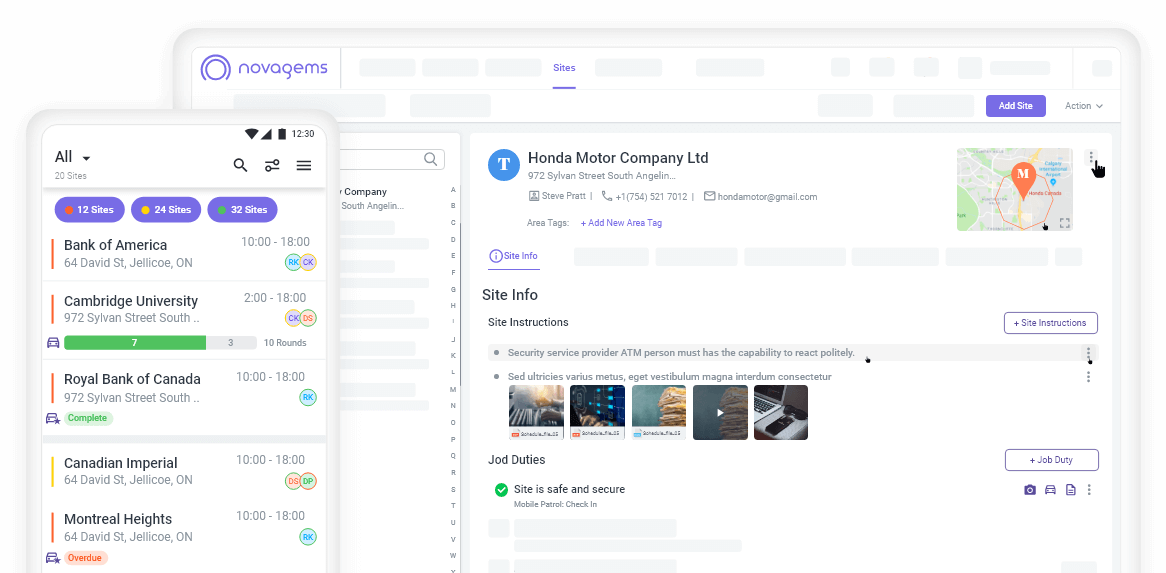
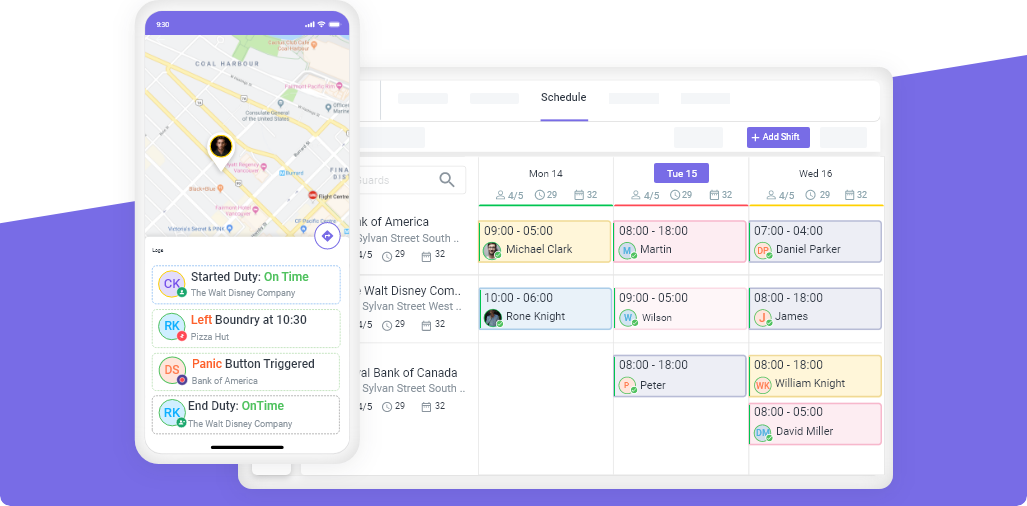
The next generation of security guard management software can be a real game-changer in managing government contracts. Solution software, such as Novagems, assists security firms in managing these two concepts: organization and accountability. By providing GPS tracking to confirm guard locations, mobile applications that enable instant incident reporting, and automated scheduling to prevent coverage gaps. The solutions are not just niceties but rather directly address the documentation and reliability standards that government contracts call for. When your guards can clock in via GPS and submit detailed reports right from their phones, you are not just meeting standards. You are exceeding them with much less administrative headache.
Keep Communication Consistent
Don’t wait for problems to get in touch with your government client. Set up periodic calls with the facility manager or your primary contact. Provide positive updates and address minor issues up front. Respond when they call.
Government agencies appreciate those contractors who are easy to work with and proactive about communicating. It is this relationship-building that makes a huge difference in how they rate your performance.
Invest in Your People
Your guards are your service. Invest in thorough training, competitive wages, and good management. High turnover and inconsistent staffing are among the top complaints about security contractors. If you can provide the same reliable guards consistently, you’re already ahead of much of your competition.
Well-trained, professional guards are a reflection of your company and serve to make life easier for government staff with whom they work daily.
Document Everything
Documentation is protection in government contracting. Keep detailed records of every shift, every incident, every communication, and every deliverable. If questions arise later-and they often do-having thorough documentation proves your compliance and professionalism. The modern security management software makes it easier by automatically tracking check-ins and creating activity logs, reports, etc. These systems enhance your service delivery while providing the kind of paper trail needed for government contracts.
Be Responsive to Feedback
Government clients will, from time to time, review your performance and provide feedback or requests for change. Respond promptly and in a professional manner to any feedback provided. If they have found a problem, correct the problem immediately and inform them of the corrective action you have taken. The defensive, slow-responding contractors do not remain in government contracting for a long period. Those who take feedback as an opportunity for improvement and exemplify their dedication to excellence forge long-lasting relations.
Prepare for Audits and Inspections
Government contracts often include the right to audit or inspect your operations. This isn’t personal - it is just standard operating procedure. Be prepared for these visits by maintaining records in an organized fashion and by making sure your staff know what to expect. Look at audits as an opportunity to demonstrate professionalism. Approaching audits in this mindset can also help contractors project themselves to government clients as open, forthright, and having nothing to hide.
Frequently Asked Questions
How long does it take to win a government security contract?
The timeline typically ranges from 60 days to 6 months. The evaluation period alone can take 30-90 days after submission. Factor in proposal preparation time, and you’re looking at several months from start to finish. This is why building relationships and getting on vendor lists early matters.
Do I need to be the lowest bidder to win?
Not necessarily. Most government security contracts use “best value” evaluation, considering technical approach, past performance, and cost together. Being the cheapest doesn’t help if your technical proposal is weak. Focus on demonstrating quality and capability alongside competitive pricing.
Can small security companies compete for government contracts?
Absolutely. Many agencies have goals for awarding contracts to small businesses and set aside opportunities specifically for them. Start with smaller contracts to build experience, then pursue larger ones. Your size can be an advantage in flexibility and personalized service. Consider partnering with other companies for larger opportunities.
What if I’ve never had a government contract before?
Start by registering in SAM.gov and target smaller, local opportunities. Your private sector experience counts as relevant past performance. Consider subcontracting for established government contractors to gain experience. Focus proposals on service quality, training programs, and technology rather than dwelling on lack of government experience.
How important is having security management software?
Increasingly important. Government agencies value technology that improves accountability and reporting. Companies using GPS tracking, digital reporting, and scheduling tools have a competitive advantage and find it easier to meet documentation requirements. If you’re serious about government contracting, modern security management software should be a priority.
What happens if I can’t fulfill a contract I’ve won?
This seriously damages your reputation and future opportunities. Government agencies track contractor performance, and failures follow you. Only bid on contracts you’re confident you can complete. If unexpected issues arise, communicate immediately with the agency to find solutions together.
How do I know if a government security contract is profitable?
Calculate all costs thoroughly: wages, insurance, management time, vehicles, technology, training, and benefits. Factor in 30-60 day payment delays and add a reasonable profit margin for unexpected costs. If the numbers don’t work, don’t bid. An unprofitable contract is worse than no contract. Your pricing accuracy will improve with experience.
Ready to Take Your Security Company to the Next Level?
Winning local government security contracts can transform your business, providing stable revenue and valuable credibility. The key is preparation, strategy, and consistent service delivery. Start by getting your documentation in order, familiarizing yourself with where opportunities are posted, and building the capabilities that make your proposals competitive.
Remember, every successful government contractor started with their first contract. With the right approach and commitment to excellence, your security company can build a thriving government contracting business that serves your community while growing your bottom line.
Looking for tools to help you deliver the professional service government contracts demand? Novagems provides security companies with powerful management software, including GPS tracking, digital reporting, and scheduling tools that help you win more contracts and deliver exceptional service.
See Novagems in action
Join 500+ security & cleaning companies that replaced spreadsheets with Novagems.
✓ 14-day free trial · ✓ Free onboarding · ✓ Cancel anytime