Armed vs. Unarmed Security Guards: Which Does Your Business Need?
Wed, Dec 17, 2025
Read in 13 minutes
Learn the key differences between armed and unarmed security guards, including costs, risks, training, and when each option makes sense for your business.
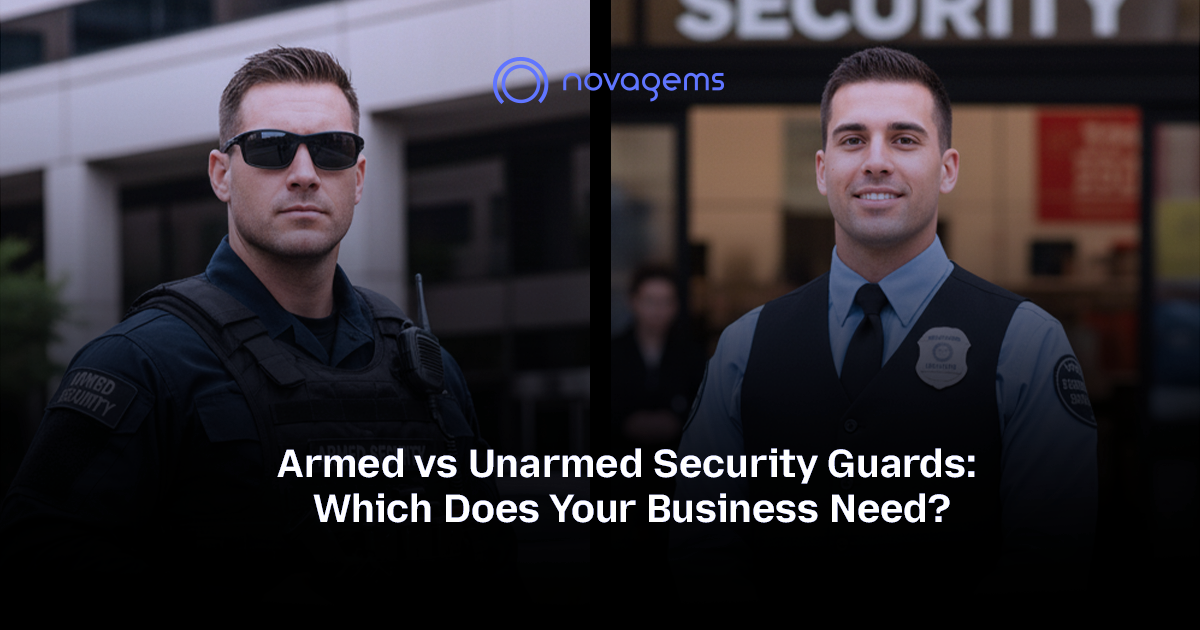
Choosing security for your business is a big deal. You’re putting your property, employees, and customers in someone else’s hands. When you start looking at security options, you’ll quickly face this question: Should you hire armed security guards or unarmed guards?
This choice matters more than you might think. Pick wrong, and you could waste money on security you don’t need. Or worse, you won’t have enough protection when trouble hits. Recent data shows that businesses in high-crime areas that used unarmed guards (when they really needed armed guards) had 3-4 times more incidents.
But there’s another side to this. If you bring armed guards into a safe, low-risk place, you might scare customers away. You’ll also pay a lot more money and face more legal risks.
So how do you choose? This guide explains everything about armed vs unarmed security guards. You’ll learn what each type does, what they cost, and how to pick the right one for your business.
Key Takeaways
- Armed guards need a lot more training. They don’t just learn basic security skills. They also need 40-80 hours of special firearms training.
- Armed guards cost 30-50% more. Unarmed guards cost about $15-30 per hour. Armed guards cost $25-45 per hour or more.
- The type of guard changes how customers feel. Armed guards stop crime better, but some customers find them scary. Unarmed guards are friendly and still prevent crime just by being there.
- Most businesses only need unarmed security. Unless you work with very valuable items, lots of cash, or face real violent threats, unarmed guards can handle your needs.
- Technology helps both types of guards work better. Modern software helps you schedule guards, track where they are, and make sure they’re doing their job—whether they’re armed or unarmed.
The Importance of Choosing the Right Type of Security for Your Business
This decision affects more than just your budget. It changes your whole business.
When You Pick Armed Guards (But Don’t Need Them)
You create a scary atmosphere that pushes customers away. Think about it: Would parents bring their kids to a family restaurant with armed guards at the door? Would shoppers feel comfortable browsing clothes when they see guns? Your workplace changes when armed security shows up.
When You Pick Unarmed Guards (But Actually Need Armed)
You’re putting people and property at risk. A jewelry store in a high-crime area with just unarmed guards? Criminals know those guards can’t really stop them. A bank that handles lots of cash with unarmed security? That’s not enough protection against armed robbery.
Making the Right Choice
The right choice depends on your honest answers to these questions:
- What kind of business do you run?
- Where are you located?
- What are you protecting?
- What real threats do you face?
Here’s an example: A small office building in a safe suburb doesn’t need armed guards in the lobby. That’s too much. But a warehouse storing expensive medicines in an area with lots of theft? Armed guards might be the only smart choice.
Your insurance company cares about this too. Many insurance companies require certain security levels based on what you do and where you are. Some won’t cover high-value businesses without armed guards. Others might charge you more if you use armed guards without a good reason.
The bottom line? This choice affects your security, your costs, your insurance, how customers feel, and even legal risks. It’s worth spending time to get it right.
Armed vs. Unarmed Security Guards: Core Differences
Let’s look at what really makes armed and unarmed guards different (besides just carrying a gun).
-
Training and Certification
Unarmed guards learn basic security skills:
- How to watch and observe carefully
- How to write reports
- How to control who enters a building
- How to calm down angry people
- What to do in emergencies
- What they’re legally allowed to do
Most states require 8-40 hours of training for unarmed guards. That’s enough to handle most situations they’ll face.
Armed guards learn everything unarmed guards learn, PLUS a lot more about guns. The extra training includes:
- How to safely use and store guns
- When the law says they can use deadly force
- How to shoot accurately
- How to judge if something is really a threat
- How to avoid using their gun when possible
- What could happen legally if they use their gun
Different states require different amounts of gun training:
- California: 14 hours (8 in classroom, 6 at shooting range)
- New York: 47 hours
- Florida: 8 hours extra
- Colorado: 80 hours
Armed guards must pass written tests and shooting tests. Many states make them retake these tests every year. The rules are strict because mistakes with guns can be deadly.
-
Equipment and Authorization
Unarmed guards carry:
- Two-way radios to talk to other guards
- Flashlights
- Smartphones for writing reports
- Non-lethal tools like batons or pepper spray (where allowed by law)
Their equipment helps them watch, communicate, and defend themselves if needed—but not with deadly force.
Armed guards carry everything unarmed guards have, plus:
- A gun (usually a handgun) registered in their name
- Extra bullets
- A special holster and belt
- Sometimes handcuffs
The guard usually has to buy their own gun. This can cost several hundred to over a thousand dollars.
More importantly, armed guards are legally allowed to use deadly force in certain situations. This comes with huge responsibility and legal risk. Unarmed guards don’t have this option—which is actually right for most security jobs.
Cost Difference
Here’s where this hits your wallet:
- Unarmed guards: $15-30 per hour
- Armed guards: $25-45 per hour or more
That 30-50% price difference adds up fast. For one guard post working 24 hours a day, 7 days a week:
- Unarmed: About $130,000-260,000 per year
- Armed: About $220,000-390,000 per year
- Difference: $90,000-130,000 more per year for armed
Why does armed cost more?
- More training time and classes
- Higher insurance (more legal risk)
- Equipment costs (guns, bullets, gear)
- License fees every year
- Higher skill level = higher pay
-
Duties and Environments
Unarmed security guard duties focus on preventing problems:
- Watch entrances and exits
- Check IDs and badges
- Walk around the property on patrols
- Write detailed reports about what they see
- Help customers find their way around
- Check on alarms and investigate them
- Keep track of visitors
- Call police when needed
- Stop crime just by being visible
Where you’ll find unarmed guards:
- Office buildings
- Stores and shopping malls
- Schools and colleges
- Hospitals
- Apartment buildings and neighborhoods
- Hotels
- Business parks with normal risk
Armed guards handle tougher jobs:
- Protect very valuable items or cash
- Guard executives or VIPs
- Deal with threats involving weapons
- Transport valuable items
- Secure high-risk events
- Protect important facilities (government buildings, utilities)
- Work in places where violent crime is a real possibility
Where you’ll find armed guards:
- Banks
- Jewelry stores and luxury shops
- Warehouses with expensive medicines
- Armored trucks (carrying money)
- Protecting CEOs or celebrities
- Industrial sites with very expensive equipment
- High-crime areas that need maximum deterrence
Key Considerations for Businesses
How do you actually decide which type you need? Think about these important factors:
- Risk Assessment
Be honest about your actual risks:
- Check your area’s crime rate: Look up police statistics for your neighborhood. Are break-ins common? Is there violent crime?
- Think about what you’re protecting: Do you have expensive inventory? Lots of cash? Sensitive information?
- Look at past problems: Have you had security issues before? What happened?
- See what similar businesses do: What kind of security do your competitors use?
- Low-risk places (like suburban offices, safe neighborhoods, regular retail stores) usually just need unarmed guards.
- High-risk places (like high-crime areas, businesses with lots of cash, places storing valuable items, businesses facing known threats) need armed guards.
- Budget
Be realistic about what you can spend. That 30-50% cost difference matters, especially if you need multiple guards or 24/7 coverage.
Do the math: What’s the yearly cost difference? Does the extra protection justify spending that much more?
Sometimes the answer is obviously yes—banks must have armed guards no matter what it costs. Sometimes it’s obviously no—a quiet office building doesn’t need armed guards just to feel safer when unarmed guards work fine.
- Business Image and Customer Comfort
Think about how security affects your customers.
Some places benefit from armed guards—customers feel safer. Banks, jewelry stores, and high-end stores can look more secure with armed guards.
Other places suffer with armed guards around. Family restaurants, schools, stores in safe areas, and hospitals often find that guns make people nervous. Families with kids especially don’t like seeing firearms.
- Legal Rules
Some industries have specific security requirements. Check if your industry, location, or insurance requires certain security levels.
- Banks often must have armed guards
- Government contracts may require armed protection
- Your insurance might require (or not allow) armed guards
Don’t guess—ask your insurance company and check any rules for your industry before deciding.
- Employee Input
Talk to your employees about what they need and how they feel. They work with security every day.
Ask them:
- Does current security feel like enough?
- Would armed guards make them feel safer or more nervous?
- Have there been problems that suggest stronger security is needed?
Your employees’ opinions matter for security planning and for keeping everyone comfortable at work.
How Technology Helps Manage Armed and Unarmed Guard Operations
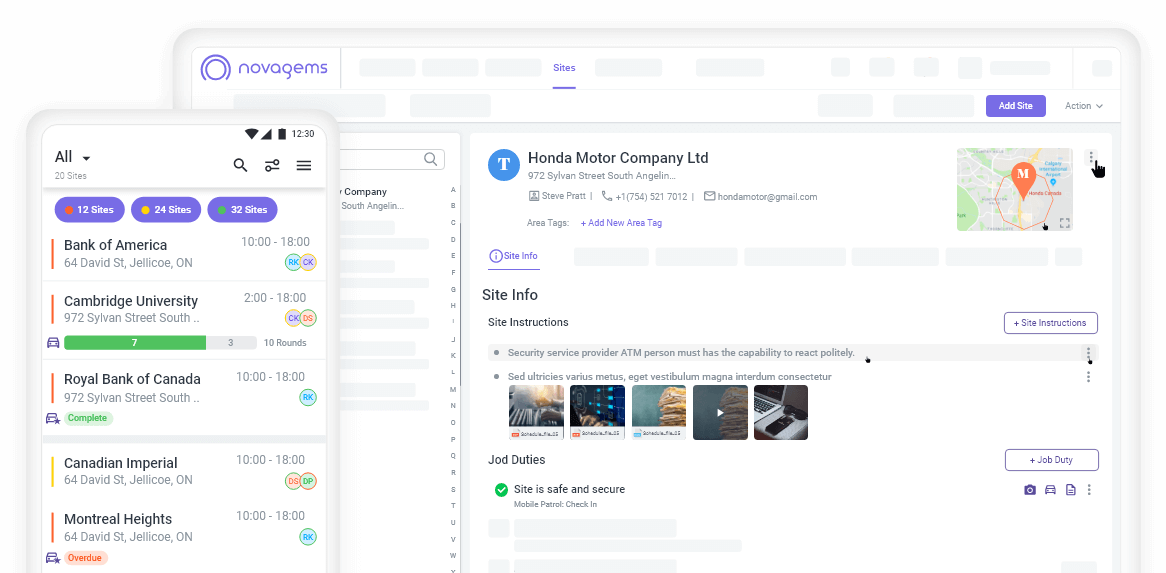
Whether you choose armed or unarmed guards, modern technology makes both types work better. Security guard software helps you manage your security team more easily.
- Smart Scheduling
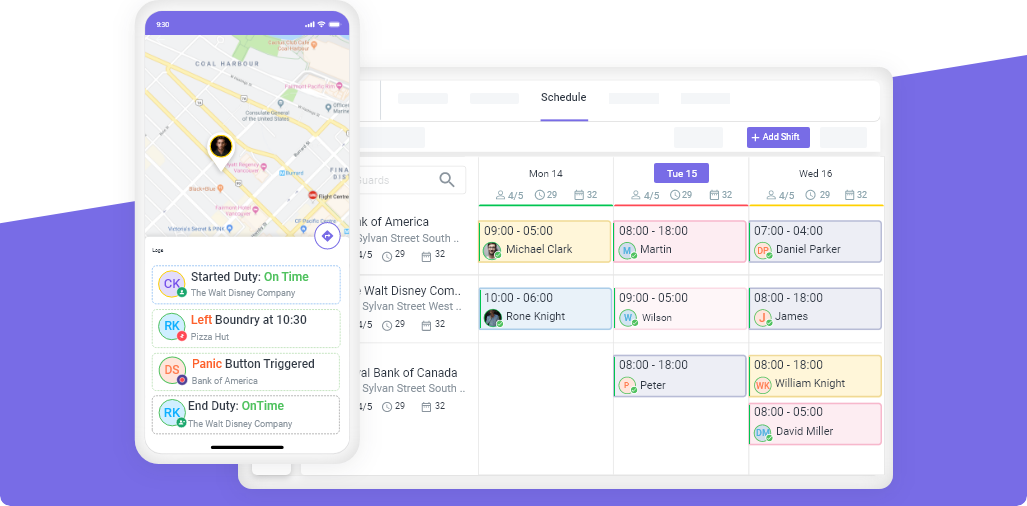
Software like Novagems helps you schedule guards based on:
- What each site needs
- Which guards have the right licenses
- Each guard’s experience level
For businesses using both armed and unarmed guards, the software makes sure armed guards only go where they’re needed (and allowed). This automatic checking protects you from legal problems.
The software tracks which guards can carry guns, when their licenses expire, and makes sure you never send the wrong type of guard to a job.
- GPS Tracking
You can see exactly where your guards are during their shifts. Whether armed or unarmed, accountability matters.
GPS tracking shows you:
- If guards are completing their patrol routes
- If they’re checking all required locations
- If they’re staying in their assigned areas
This is especially important for armed guards, where you need detailed records.
- Digital Reports
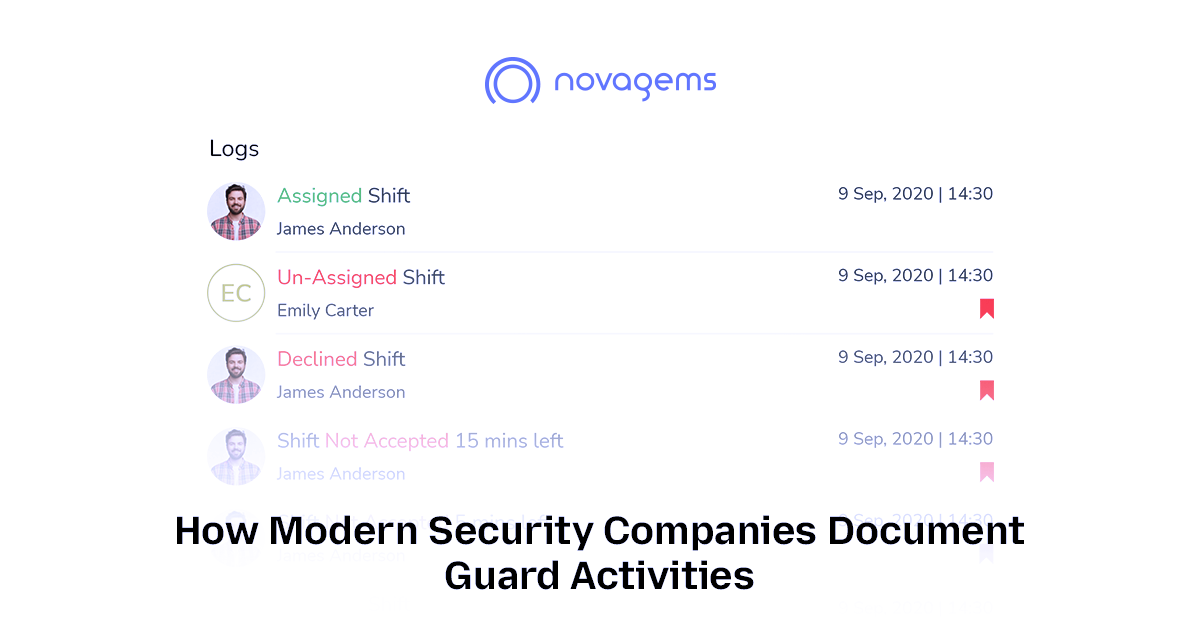
When something happens, guards can write reports right away on their phones. They can add:
- Photos
- GPS location
- Exact time stamps
This documentation protects your business and the guards. If an armed guard ever has to explain their actions, having detailed reports with GPS proof can be critical in court.
- License Tracking
Armed guards need to renew their licenses and training regularly. Good software tracks these dates automatically and warns you before licenses expire.
This prevents the big problem of having armed guards work with expired licenses, which could be a legal disaster.
- Performance Monitoring
Track how guards are doing through:
- How many checkpoints they complete
- How fast they respond to problems
- Quality of their reports
- Whether they show up on time
This data helps you see who’s doing great and who needs help. For armed guards especially, high performance isn’t optional—it’s critical for safety.
- Easy Communication
Built-in messaging lets guards, supervisors, and dispatchers talk instantly. In emergencies, quick communication can make a huge difference.
Both armed and unarmed guards benefit from being able to reach help immediately.
Final Thoughts
The armed vs unarmed security guard decision comes down to matching your real security needs with the right level of protection.
Here’s the truth: Most businesses think they need armed security when they really don’t. They end up spending thousands more than necessary and might make customers uncomfortable.
How to Know What You Need
Be honest about your risks. If you’re not handling very valuable items, don’t face real violent threats, and aren’t in a high-crime area, unarmed security almost certainly works fine for you.
Professional security guards prevent crime just by being there—whether they’re armed or not. Unarmed guards handle most of the situations businesses actually face.
When Armed Security Makes Sense
But if your risk check reveals real threats—if you’re protecting valuable items in dangerous areas, handling lots of cash, or facing specific security threats—then armed security is worth it. Don’t try to save money when the stakes are high.
Use Technology No Matter What
Whatever you decide, invest in good management software. Technology like Novagems helps you:
- Schedule guards efficiently
- Stay compliant with laws
- Track licenses and certifications
- Make sure guards are accountable
Good security isn’t just about hiring the right guards. It’s about managing them well.
Next Steps
Start with a real security check. Talk to security professionals. Look at crime numbers for your area. Think about what’s normal in your industry. Be realistic about your budget.
Remember: The best security is the one that matches your actual needs—not your fears or guesses.
FAQs
What is the main difference between armed and unarmed security guards?
The main difference is that armed guards carry guns and can use deadly force in certain situations. Unarmed guards don’t carry guns. Armed guards also need a lot more training—usually 40-80 extra hours just for gun training. They work in riskier places like banks or jewelry stores. Unarmed guards focus on preventing problems by watching carefully and being visible. They work in safer places like offices, stores, and schools.
What are armed security guard requirements?
To become an armed guard, you must:
- Be at least 21 years old
- Complete basic security training (8-40 hours)
- Complete special gun training (14-80 hours depending on your state)
- Pass written tests and shooting tests
- Get a gun license or permit
- Pass a thorough background check
- Sometimes take a psychological test
Many states also make armed guards retake tests every year to keep their license active.
What duties do unarmed security guards perform?
Unarmed guards:
- Control who enters buildings
- Walk around property on regular patrols
- Check IDs and visitor badges
- Write detailed reports about what they see
- Respond to alarms
- Help customers with directions
- Keep visitor logs
- Call police when needed
- Stop crime just by being visible
They handle problems by watching carefully, talking to people, and calming situations down—not with physical force. They call the police if things get serious.
Are armed security guards more expensive than unarmed?
Yes, armed guards cost 30-50% more. Unarmed guards cost about $15-30 per hour. Armed guards cost $25-45 per hour or more.
The extra cost comes from:
- More training classes
- Higher insurance (more legal risk)
- Gun and equipment costs
- Yearly license fees
- Higher pay for special skills
For one guard working 24/7, armed guards cost about $90,000-130,000 more per year than unarmed guards.
How do I know if my business needs armed or unarmed security?
Look at these factors:
- Your area’s crime rate - Is it dangerous?
- What you’re protecting - Do you have very valuable items or lots of cash?
- Your industry standards - What do similar businesses use?
- Past security problems - What has happened before?
- Customer comfort - Will guns make people nervous?
Generally, you need armed security if you run:
- Banks or financial places
- Jewelry or luxury stores
- Businesses with lots of cash
- Places in high-crime areas
- Warehouses with expensive medicine
Most other businesses (offices, regular stores, schools, hospitals, and apartments) work fine with professional unarmed security.
Can unarmed security guards carry any weapons?
Unarmed guards don’t carry guns, but they often carry non-deadly tools where the law allows:
- Batons
- Pepper spray or mace
- Tasers (with special training)
- Flashlights (which can be used for defense)
- Two-way radios to call for help
What they can carry depends on state and local laws. Guards must get proper training on any defensive tools they use. These tools let unarmed guards defend themselves if they really have to, without the risks that come with guns.
Get a Free Trial
Sign up For Newsletter
Latest Blog Posts


Get Started
Start being productive & grow your business
with Novagems